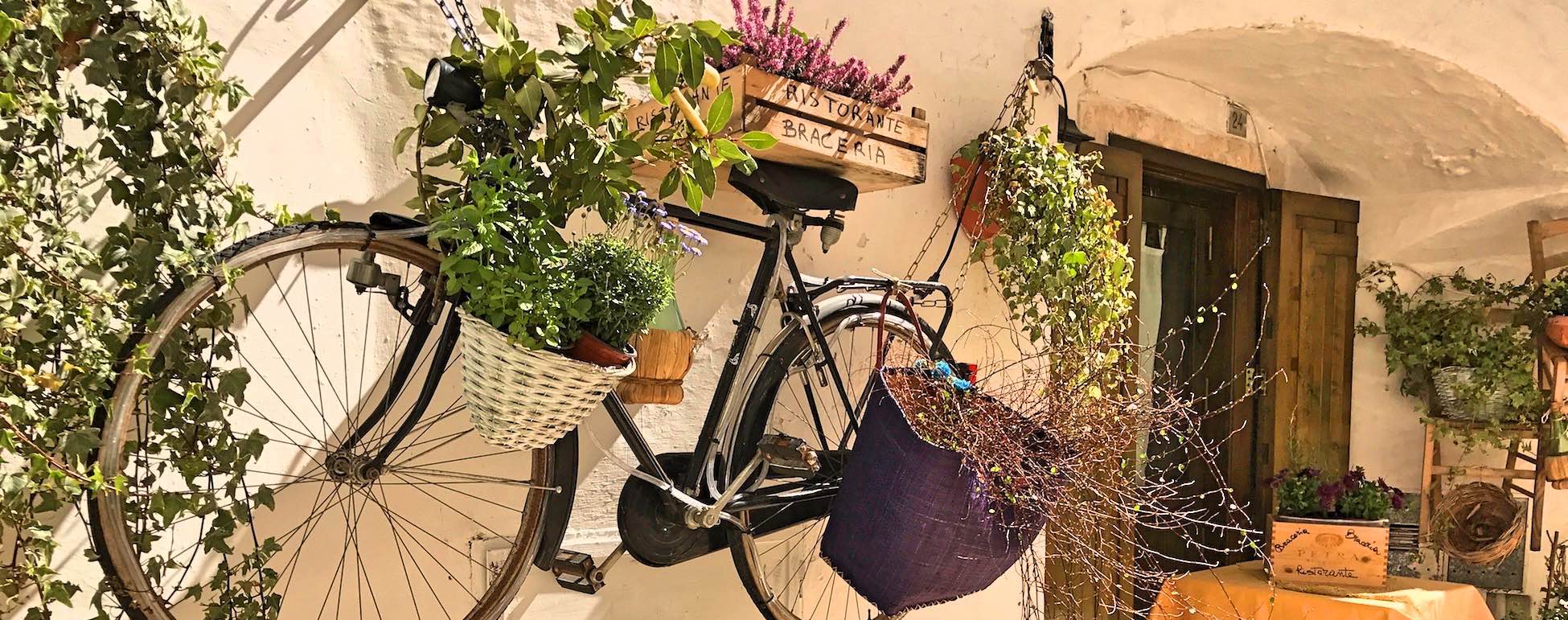


Overlooking the Ionian Sea and set between turquoise waters and whitewashed alleyways, Gallipoli is a destination that captivates you at first sight.
Fondata dai Greci con il nome di Kallipolis – "città bella" –, la città vecchia sorge su un’isola collegata alla terraferma da un ponte seicentesco ornato di pietra locale e antiche mura difensive. Le stratificazioni storiche – bizantina, normanna, spagnola – si percepiscono nel gusto barocco della Cattedrale di Sant’Agata, nelle torri del Castello Aragonese e nell’atmosfera marinaresca del mercato del pesce che si anima all’alba. Camminando per le sue strade profumate di salsedine, ogni pietra e ogni angolo raccontano un pezzo della sua lunga storia tra fede, commercio e bellezza mediterranea.
What to see in Gallipoli
The first encounter with Gallipoli begins as you cross the old bridge and enter the magic of the Aragonese Castle. Surrounded by the gentle waters of the Ionian Sea, the imposing castle overlooks the lively heart of the old town.
Built as a defensive fortress, the castle is completely surrounded by the sea.
It can already be seen from the entrance to the peninsula that contains the old town, reached by the evocative seventeenth-century bridge. In the past, the fortified castle was most likely separated from the surrounding land.
Today you can admire its quadrangular structure, surrounded by four towers at the corners and a fifth tower, the Rivellino, detached from the main perimeter and isolated in the water.
The Aragonese Castle is therefore a fortress surrounded by the sea, telling centuries of coastal defence through its towers, prisons and secret passages, recalling battles and the constant presence of the sea.
Proseguendo, alzando lo sguardo, si incontra la Cathedral of Sant’Agata, a Baroque masterpiece that dominates the island with its golden carparo-stone façade and interiors rich in marble and seventeenth-century paintings, a true religious gem of Salento.
It stands at the highest point of Gallipoli’s old town and suddenly appears to visitors as they turn into one of the village’s narrow streets.
The reaction is almost always the same: it seems far too imposing for the small and charming Via Duomo. It is the main monument of the Pearl of the Ionian Sea and a symbol of local Baroque architecture. The façade, finely carved in Lecce stone with Rococo details, is divided into two levels decorated with statues and Baroque motifs, offering a glimpse of what awaits inside: a Latin-cross plan with three naves divided by wide arches resting on columns. A true treasure chest of works of art, it contains a precious collection of paintings by Salento artists from the seventeenth and eighteenth centuries.
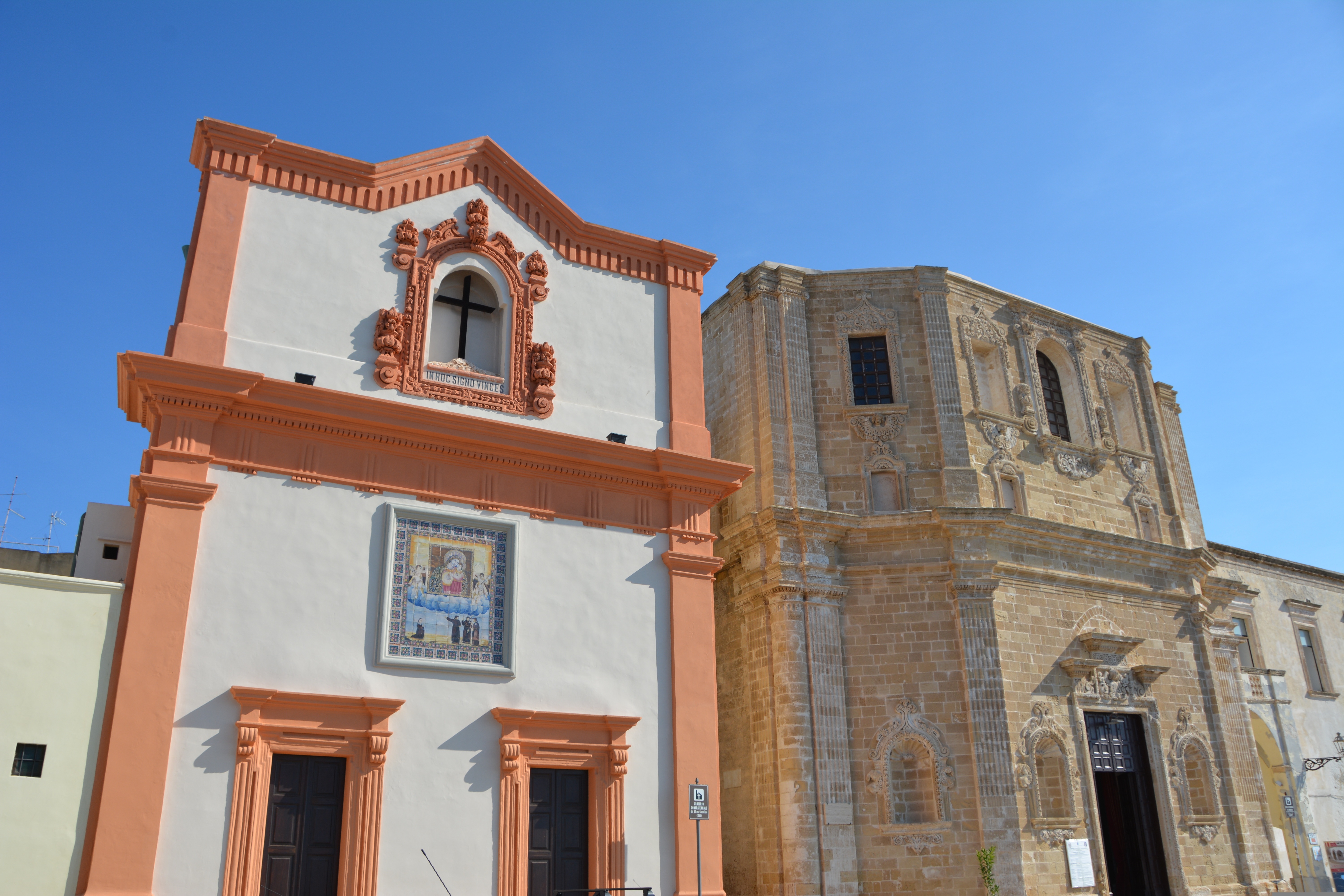
A pochi passi, la Church of Santa Maria della Purità overlooks a beach that looks almost painted: modest on the outside, its richly decorated interior, with majolica tiles and gilded paintings, comes as a surprise.
It stands on the bay of the same name, one of Gallipoli’s landmarks, and is an artistic treasure where history and devotion meet.
The church, the oldest in Gallipoli, dates back to the second half of the seventeenth century. Here religious faith and maritime traditions come together: it is home to one of the city’s oldest confraternities, founded by workers who unloaded goods at the port of Gallipoli. Inside, it preserves statues of the Dead Christ and the Sorrowful Madonna, both carried in procession during Holy Week.
Among the valuable works of art, you can admire a papier-mâché statue of Saint Cristina, created by Lecce papier-mâché master Achille De Lucrezi, as well as a fascinating historic organ. The majolica-tile floor and eighteenth-century choir stalls are also well worth seeing.
Walking through Gallipoli’s old town along Via De Pace, you can admire Palazzo Granafei, named after its owners at the end of the nineteenth century. For those interested in industrial archaeology, an extraordinary underground olive mill lies beneath the building. This was an ancient mill where lamp oil was produced to light European streets before public lighting was introduced. Today, the museum preserves this history through objects and photographs, offering a glimpse into a world where everyday life and the sacred came together. The building’s broad façade features an inscription dating back to 1625, written in Spanish and dedicated by Don Francesco D’Acugna to Philip IV of Spain.
An elegant example of Baroque architecture, Palazzo Balsamo preserves finely decorated architectural details that make it a beautiful historic residence. Take your time to admire its Catalan-Durazzo-style portal and the delicate windows opening onto the main façade.
Not far away, in the heart of the island, the fish market at the port is a spectacle of colours and aromas: fishermen unload octopus, sea urchins and shellfish while the friendly voices of local people create an authentic and lively scene.
A small watchtower overlooking the Gallipoli coastline. Exposed to the warm sirocco winds, it was built for defensive purposes in the sixteenth century. The structure has irregular stone blocks and a truncated-pyramidal shape, with three machicolations on each side.
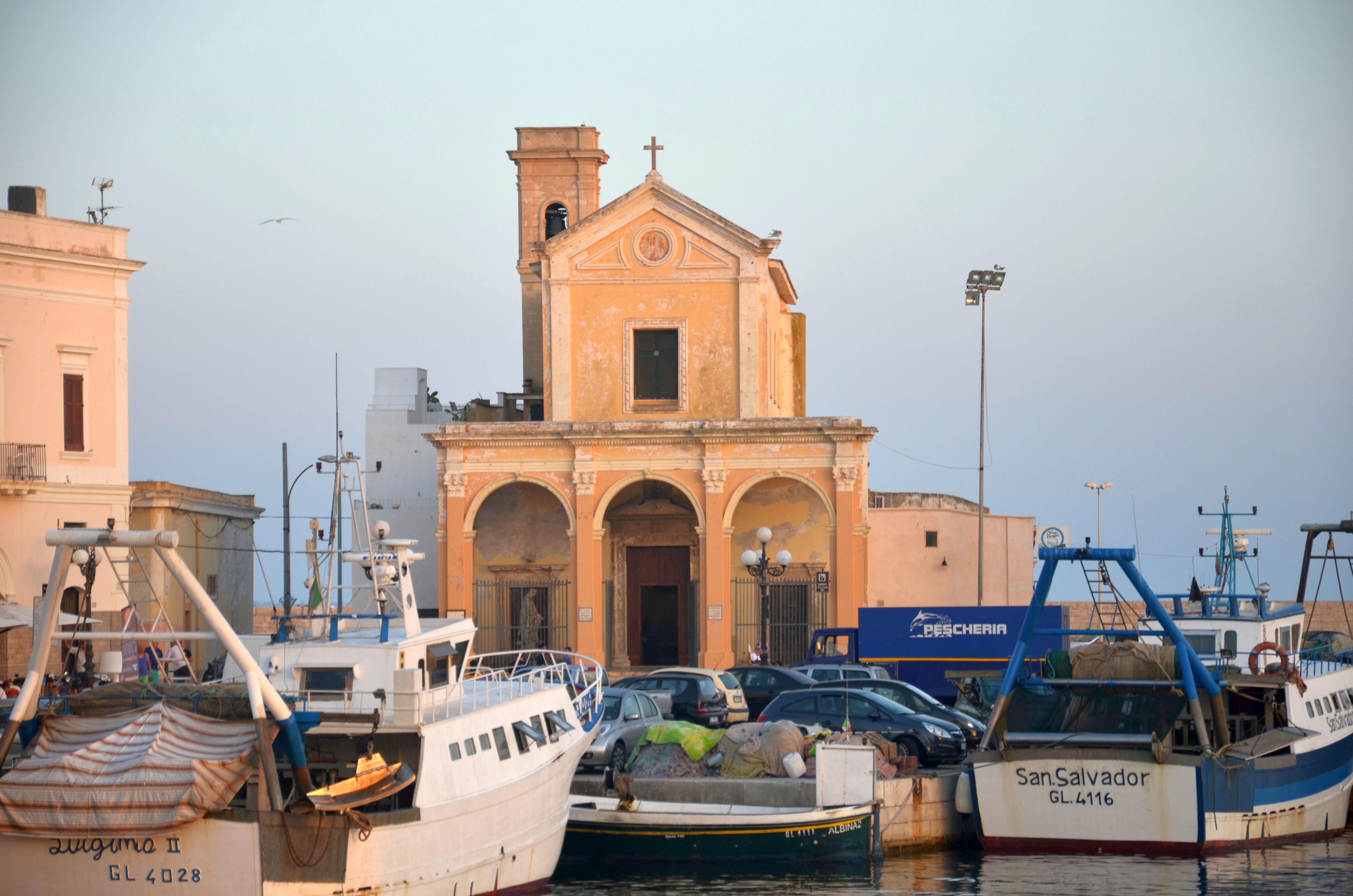
According to local tradition, fishermen would look towards the Sanctuary of Santa Maria del Canneto as they sailed away towards the endless horizon. Legend has it that fishermen once found a painting of the Madonna of the Visitation hidden among the reeds. The sanctuary is therefore a symbol of the faith of Gallipoli’s seafaring community. With its Baroque architecture, it stands behind Gallipoli’s Greek Fountain, not far from the old bridge connecting the historic centre with the modern town.
What to do in Gallipoli - the Slow Active Tours experience
Lasciarsi abbracciare dal mare è una delle esperienze più autentiche: dalla spiaggia della Purità, dove tuffarsi appena usciti dai vicoli del centro storico, alla famosa Baia Verde, distesa di sabbia dorata e mare cristallino che invita a dedicarsi ore di relax. Chi desidera allontanarsi dal trambusto può esplorare la natura selvaggia della riserva naturale di Punta Pizzo, con baie isolate e scenari che oscillano tra pinete e scogliere. E ancora, per chi cerca una visuale insolita, una gita in barca verso l'Isola di Sant’Andrea regala prospettive da cartolina sulle acque turchesi e sui gabbiani liberi di volteggiare.
Are you reading this article and already dreaming of visiting Gallipoli?
Discover our travel experiences and set off on your next adventure!
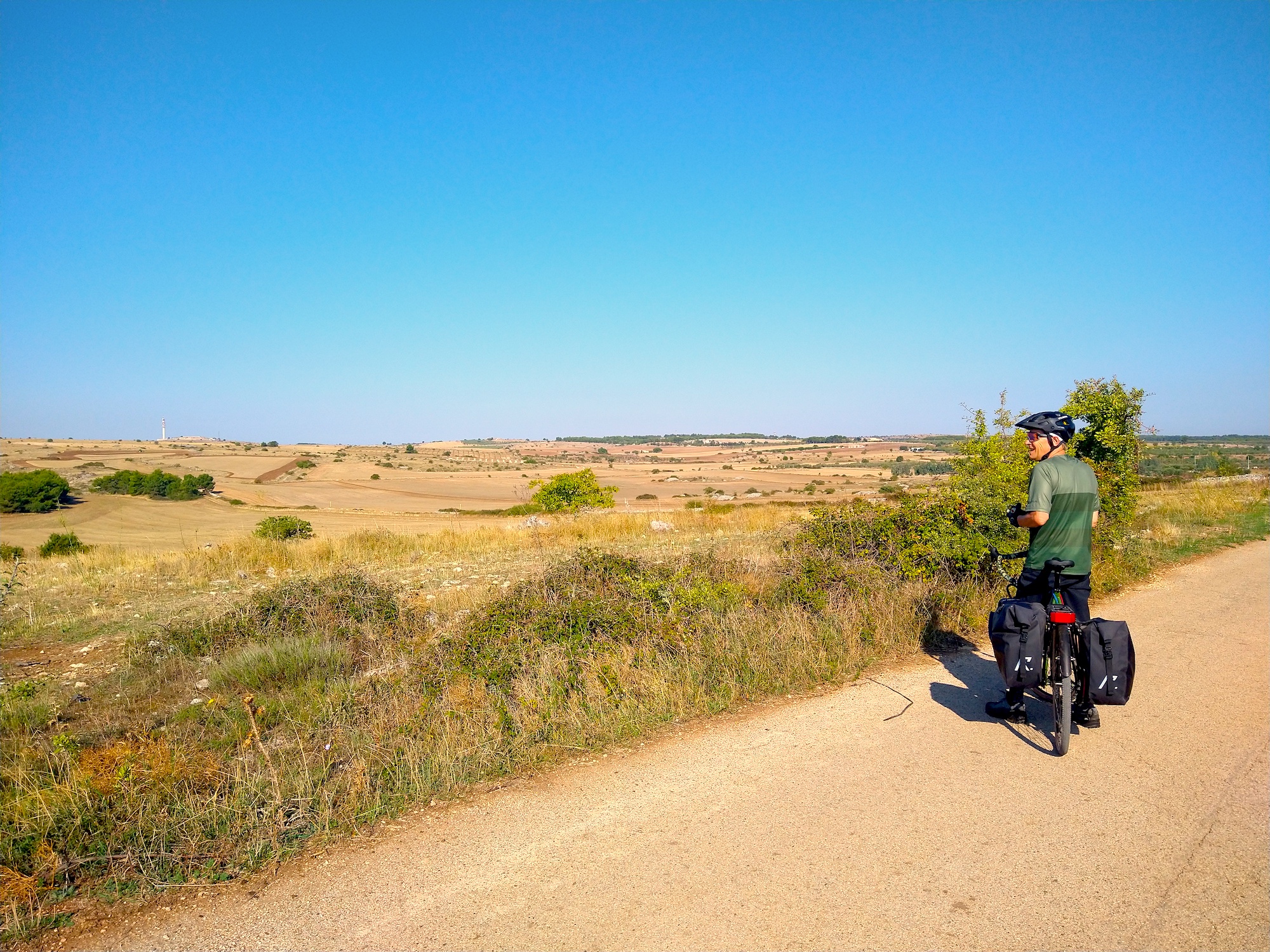
Salento Cycling Tour
A journey around the coastline of the Messapian peninsula
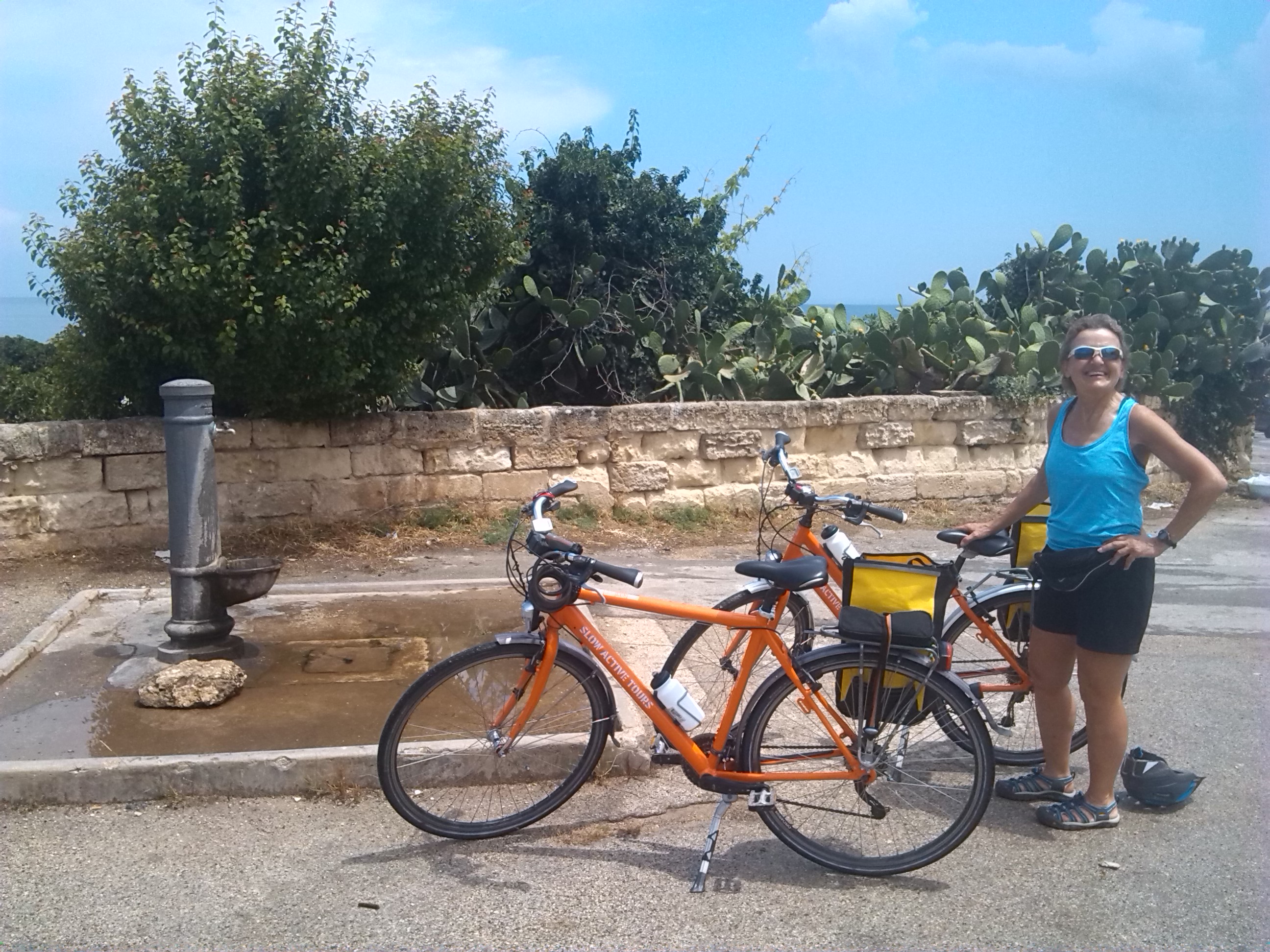
From the Trulli to Salento by Bike
From Alberobello to Lecce: a week by bike
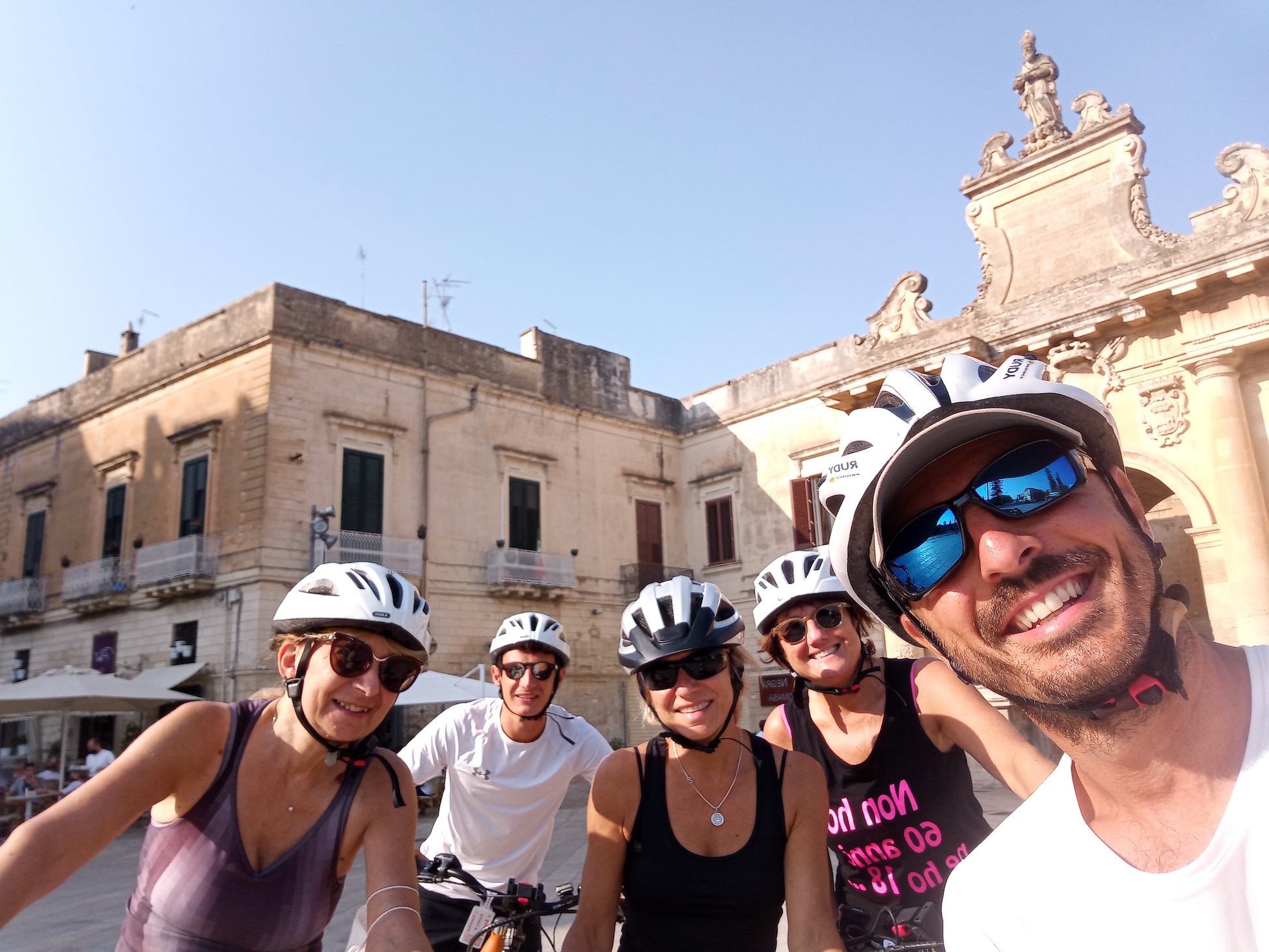
Salento by Bike: Lecce, Bacchus and Baroque
With this tour, we discover the beautiful Salento by bike, starting from Lecce each day and heading towards a different destination.
Festivals and local celebrations in Gallipoli
Gallipoli’s calendar is lively and rich in traditions. In summer, the city comes alive with music festivals, lively seafront promenades and evenings among bars and golden lights. Holy Week traditions and maritime food festivals are also an important part of local life, with scapece and fresh fish dishes filling squares and market stalls. Even outside the high season, patron-saint celebrations and local markets preserve Gallipoli’s authentic spirit, shaped by conviviality, flavours and Salento roots.
Visiting Gallipoli during Holy Week is an experience that goes beyond tourism: it is a journey into the deepest soul of Salento, where faith, emotion and collective memory come together in ancient rituals that have been repeated for centuries. During these days, the streets of the old town become a sacred stage, surrounded by dim lights, the sound of drums and the scent of incense.
Gallipoli’s Holy Week has its roots in the seventeenth century, when religious brotherhoods – still central to the celebrations today – began organising solemn penitential processions. Every ritual, step and song has a precise and profound meaning, passed down from one generation to the next.
The first moment of reflection takes place on Passion Friday, with the Procession of Our Lady of Sorrows, organised by the Brotherhood of Santa Maria del Monte Carmelo e della Misericordia. At dawn, the statue of the Virgin dressed in black leaves the Carmine Church and moves silently through the paved streets of the old town. Hooded and barefoot members of the brotherhood walk slowly to the rhythm of funeral marches, while the city falls into a deeply devotional silence.
The most anticipated and spectacular moment is Good Friday, with the Procession of the Mysteries, organised by the Brotherhood of the Crucifix. The procession begins in the late afternoon at the Church of Santa Maria della Purità and crosses the entire old town, illuminated only by the flickering light of torches and street lamps. Wooden statues representing the stages of Christ’s Passion – from the Flagellation to the Crucifixion – are carried on the shoulders of members of the brotherhood, dressed in their characteristic white robes and hoods.
A band accompanies the procession with funeral marches, including the famous Miserere, whose sound echoes through the narrow streets and across the sea, creating a suspended and deeply moving atmosphere. It is a moment when faith and sacred theatre meet, and even visitors from outside the town can be drawn into this collective experience.
Among the most moving celebrations is the Procession of the Desolate, held on Holy Saturday, representing suffering and hope. Women dressed in black accompany the statue of the Sorrowful Virgin while singing ancient popular laments passed down orally for centuries. The haunting song tells of the Mother’s grief as she awaits the Resurrection and touches everyone who hears it.
On Sunday, to the sound of bells and fireworks, Gallipoli awakens in the light of Easter Sunday. After days of silence and reflection, the city bursts into joy: the streets fill with music, aromas and encounters, in a festive atmosphere celebrating both spiritual and human renewal.
Taking part in Gallipoli’s Holy Week rituals means experiencing a tradition deeply rooted in Salento’s cultural fabric. It is not only about religion, but also a collective expression of the memory and identity of a community that still proudly preserves its traditions.
Visitors to Gallipoli during these days discover a different side of the city: not only the “Pearl of the Ionian Sea” known for its beaches and summer nightlife, but also a community that still knows how to pause, listen, pray and be moved by the quiet beauty of faith.
Traditional dishes of Gallipoli
La cucina di Gallipoli è un capolavoro di semplicità, legata al mare e alla terra, capace di emozionare con pochi ingredienti. La pesca ha plasmato i sapori della tavole gallipoline. La pesca non è solo un mestiere, è un modo di vivere che viene tramandato da generazione in generazione. Tra i piatti simbolo che devi assolutamente provare visando Gallipoli, c’è la scapece gallipolina, una pietanza simbolo: piccoli pesci fritti conservati tra strati di mollica imbevuta di aceto e zafferano, un colore e un sapore che raccontano l’ingegno di un popolo marinaro sotto assedio.
For those who love fresh seafood, Gallipoli’s red prawns are a must-try. They are traditionally enjoyed raw, but can also be served simply cooked in a pan with a drizzle of olive oil and parsley.
When talking about traditional Gallipoli dishes, you cannot miss zuppa di pesce alla gallipolina, a local fish soup served with slices of homemade bread and accompanied by local wine.
Gallipoli is a blend of history, sea and flavours. Every alley tells part of its story, the air carries the scent of salt and cooking, the castle watches silently over the town and the sunset is reflected on the sea. Discovering what to see in Gallipoli means experiencing a place where beauty meets culture, tradition and the gentle pace of life in Salento.
Where to eat and drink in Gallipoli
Here are some local suggestions:
Trattoria RosiNella in Via Incrociata 9. A lovely place in the historic centre of old Gallipoli. It has a good wine list and fresh fish is always available. The right balance between innovation and tradition makes its dishes special. Booking is recommended.
Osteria Del Vico in Vicolo Mercato 1. All the dishes have an original touch and combine the freshest fish with local produce, highlighting their quality and variety. Try the chef’s tuna speciality! Booking is recommended.
La Vinaigrette in Riviera Armando Diaz, 75. Ristorante di pesce con vista sul mare da una bella terrazza: chiedete un tavolo in terrazza. Qui, come altrove sulla costa, il pesce crudo è molto tipico. Lasciate un po' di spazio per gli ottimi dessert!