

Caselle in Pittari is an ancient settlement located on top of a hill, immersed in a characteristic karst landscape. It is no coincidence that the place name is thought to mean “small houses on the rocky mountain”.
Following careful studies carried out over recent decades on pottery discovered in the Grotta di San Michele, it is believed that the area was inhabited as early as prehistoric times. Founded during the Greek period, it reached its greatest expansion in the 3rd century BC with the Roman conquest, as evidenced by numerous Roman artefacts and a necropolis discovered in the “Laurelli” area.
Because of its important role in controlling the communication route between the inland areas and the coast, during the Middle Ages the hill where Caselle now stands was fortified with the construction of a circular tower, whose ruins still overlook the town today.
Caselle in Pittari has been linked to the cult of Saint Michael since the 8th century AD, when some Byzantine monks, fleeing Greece because they were persecuted for their opposition to iconoclasm, arrived in Cilento and found refuge on Monte San Michele. Here they settled in caves that were most likely their hermitages, where they devoted themselves to venerating the Archangel Michael.
Caselle was a fief of the De Stefano family and later passed to various baronial families, before becoming the municipal capital in 1806.
What to see in Caselle in Pittari
We have prepared a list of things to see in Caselle in Pittari, so you can peacefully admire the beauty of this fascinating small town in southern Cilento.
- Palazzo Marchesale
- Church of Santa Maria Assunta in Cielo
- MU.VI - Caselle in Pittari Virtual Museum
- Laurelli Archaeological Area
And now, let’s set off together to discover the places of Caselle in Pittari!
Palazzo Marchesale
Palazzo Marchesale originated from a Norman-Swabian fortress that already existed during the time of Frederick II. It was transformed into a residential palace only during the late Renaissance, becoming an aristocratic residence as well as, above all, a centre for managing political power and local resources.
The gate, moat and section of walls are the original structures of the castle; only the façade of the northern entrance has undergone significant transformations over the years. The battlements, still visible today, are characterised by long vertical openings arranged between alternating merlons, from which archers could attack enemies.
Church of Santa Maria Assunta in Cielo
There are no records of its foundation, which dates back to very ancient times, presumably to the same period as the medieval village. The church has three naves and preserves numerous features dating from the medieval period. Its architectural layout is typical of the Romanesque period, although it underwent major transformations over the centuries, especially following the earthquake of 1456.
During restoration works in 1989, a fresco depicting the Assumption of the Virgin, painted in 1791 by Brunetti, was discovered, together with the crypt that was used as a burial place over the centuries.
MU.VI
The Museum is set within an area of great natural importance, both from a landscape perspective and for its karst features associated with the swallow holes of the Busseto River. It hosts engaging educational and workshop activities closely connected to the local area.
Archaeological Area
The area extends into the hinterland of the Gulf of Policastro, a territory rich in natural and archaeological attractions. The site was brought to light in the 1970s during the removal of a centuries-old olive grove, when the remains of a settlement dating back to the 4th century BC were discovered.
It was a Lucanian settlement that was abandoned after the Roman conquest. The view is particularly evocative thanks to the karst landscape, characterised by small grooves cutting into the rock and creating a fascinating natural spectacle.
What to do in Caselle in Pittari - the Slow Active Tours proposal
Here is a short list of the things to do in Caselle in Pittari that you absolutely should not miss!
-
Hermitage of San Michele
The Hermitage of San Michele is located along the Cammino di San Nilo: after passing the village of Sicilì, you climb towards Monte San Michele and then take a small detour leading to this enchanting place.
-
Bussento Swallow Hole
An incredible cave that can be reached via a trail leading from the village to the heart of the river in just a few minutes. Here you can admire the extraordinary and fascinating formations created by water, which has carved into the limestone rock over centuries, giving rise to this remarkable phenomenon of great speleological interest. The same water, after flowing for a long distance, disappears into the depths and then re-emerges 4 kilometres later in the nearby village of Morigerati.
-
Karst Caves of Casaletto
The vast territory of Caselle stretches between the clayey slopes of Monte Centurino and the limestone foothills of Monte Rotondo and Monte San Michele, offering a landscape of enchanting and completely unspoilt corners, characterised by a variety of scenery, strong contrasts and incomparable beauty.
For curious and experienced hikers, a visit to the Karst Caves of Casaletto is unmissable. They are explored by only a few visitors, as access is permitted only to experienced people. From here, you can look out over a vast expanse of greenery, where olive trees stretch as far as the eye can see, immersed in nature and framed by the vibrant colours of the rich vegetation. -
Cammino di San Nilo
Caselle in Pittari provides the beautiful setting for the finish of the fourth stage of the Cammino di San Nilo, an exciting eight-stage walking route that we at Slow Active Tours offer to those who want to experience a deeper connection with nature.
Are you reading this article and already dreaming of visiting Caselle in Pittari and Cilento?
Discover our travel proposals and set off on your next adventure!
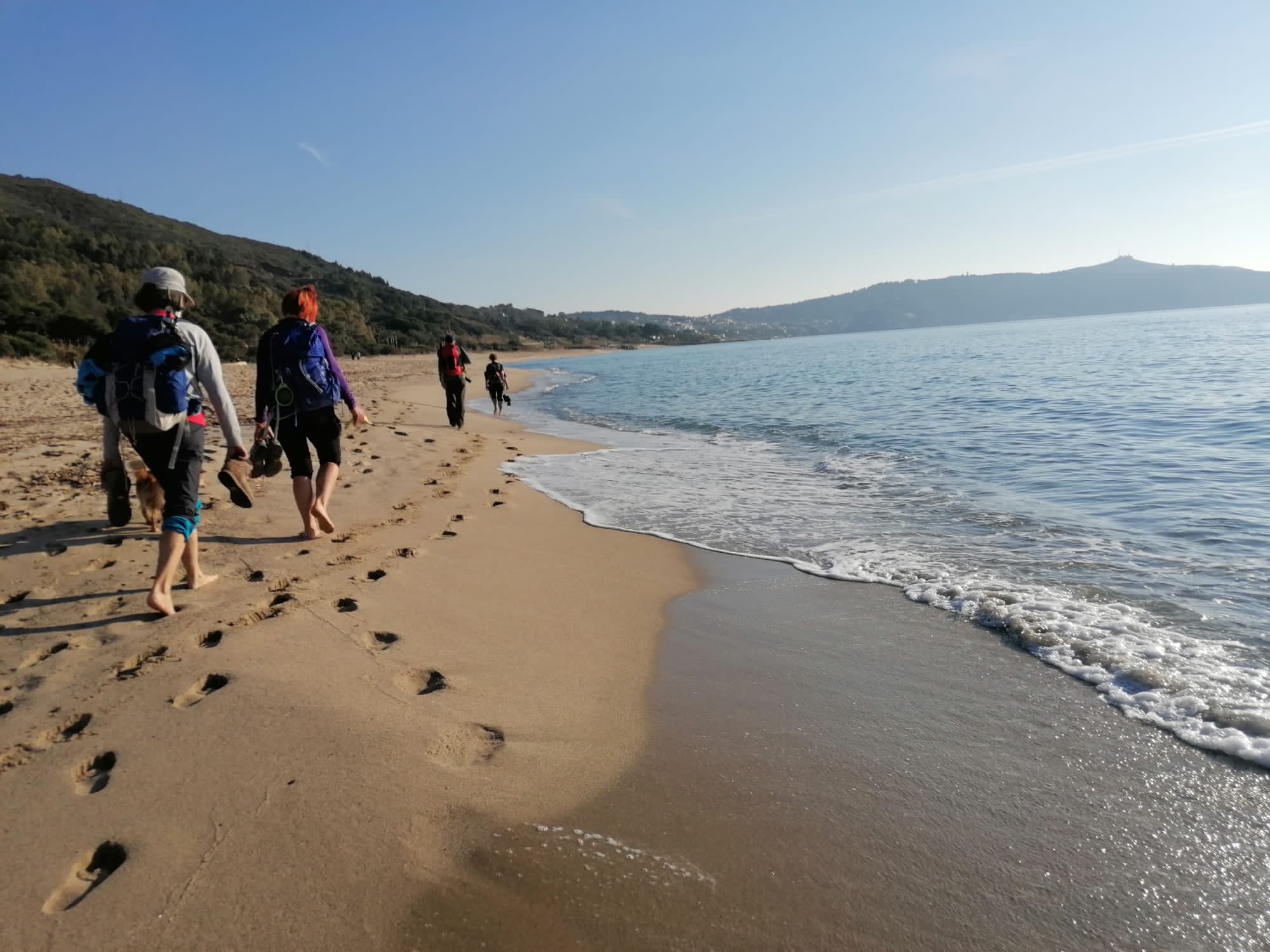
Cammino di San Nilo in a group
group trip from Sapri to Palinuro
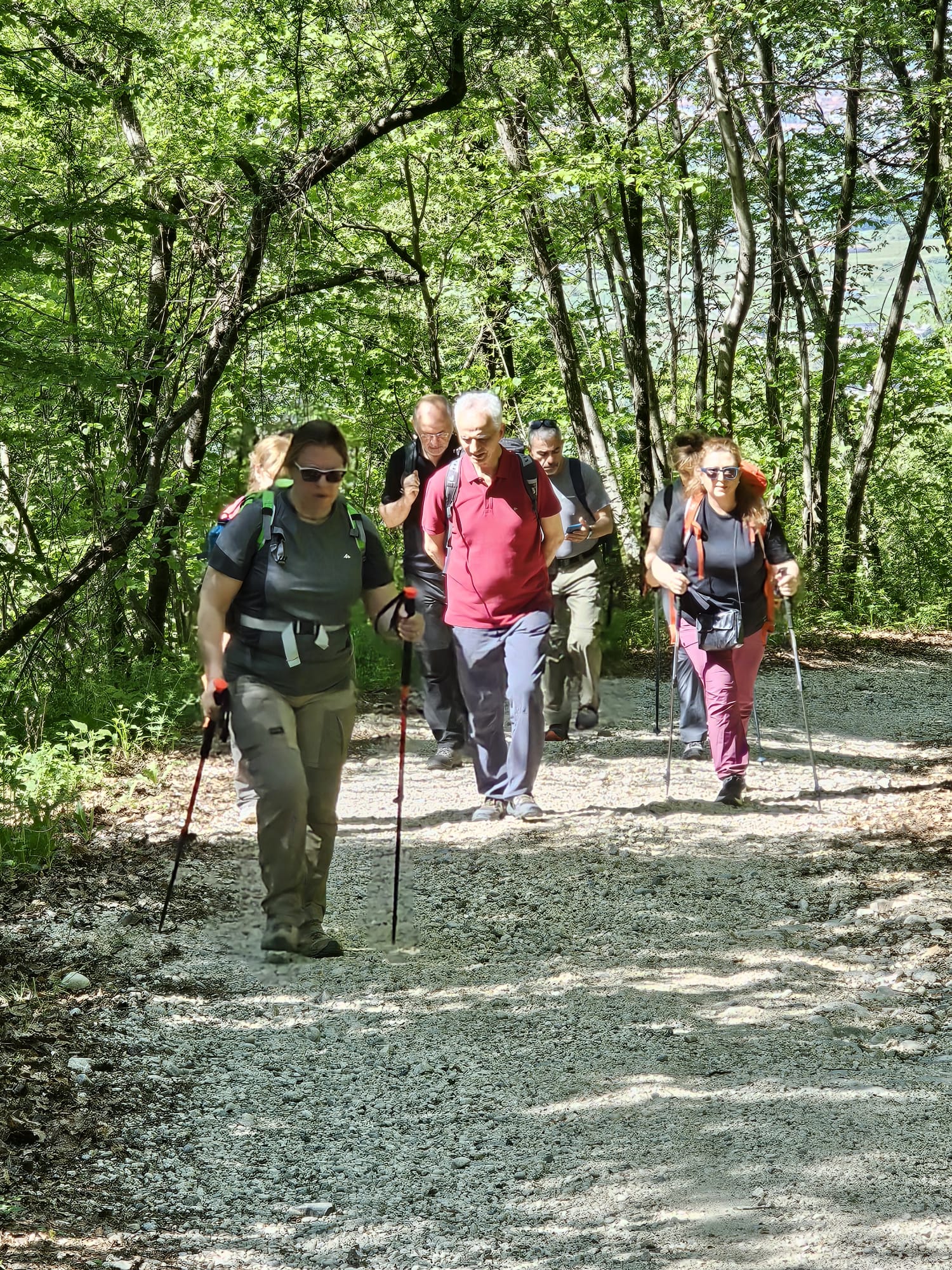
Hiking the Cammino di San Nilo
from Sapri to Palinuro

Cycling trip in Cilento National Park
7 days from Sapri to Paestum
Festivals and Popular Events in Caselle in Pittari
The Palio del grano, held in July, is an event that offers an insight into traditional farming life. It takes place over six days of activities, including discussions about the land and its cultivation, as well as exciting competitions. On the day of the Palio, everyone gathers in the square for the draw to determine the tracks where the races will take place. After the evocative competition, the celebrations continue with games around the maypole, a communal lunch, a lottery and finally the award ceremony.
From 18 to 20 August, the Caselle Film Festival takes place, an international short film festival dedicated to the environment.
At the end of September, the historic centre of Caselle in Pittari comes alive with celebrations and religious ceremonies in honour of the patron saint, San Michele. The traditional Fiera is a key event in the local fair calendar, involving the entire village.
From 31 October to 3 November 2024, an important international speleology gathering, Syhonia 2024, will take place. It is a meeting for cave and cavern enthusiasts from around the world, as well as an opportunity to exchange knowledge and experiences in the field of cave research and exploration.
Traditional Dishes of Caselle in Pittari
The local cuisine of Caselle in Pittari faithfully reflects the area’s gastronomic traditions. It is a cuisine with simple flavours yet a distinctive character.
The delicacies of this area will delight food lovers with their genuine ingredients. Among the traditional dishes is Mmaretata, literally “married soup”, a delicious soup made with vegetables, meat and cheese.
Also not to be missed are pork fillet with white sauce and involtini soffritti, served with a sauce made from blended provolone cheese and garnished with olives. The delicious frittelle are sure to please every palate, thanks to their soft batter enhanced by anchovies fried in olive oil. For those with a sweet tooth, there are Strufoli, delicate balls of shortcrust pastry that are fried and then coated in warm honey.
Eating and Drinking in Caselle in Pittari
Among the many restaurants in the centre, we recommend:
Ristorante Zi Filomena at Viale Roma, 11. A family-run restaurant with an authentic local atmosphere, offering excellent and flavoursome food made with high-quality local ingredients and traditional regional recipes.
Osteria Tancredi at Via Chiesa, 2. A carefully maintained restaurant offering genuine zero-kilometre products. The young owners offer modern interpretations of traditional dishes while preserving their classic flavours.
Agriturismo Pittari at Via Nazionale, 168. A welcoming, family-run restaurant offering a delicious journey through local cuisine in the warm atmosphere of the countryside.
So, what are you waiting for? Grab your backpack and let’s go!