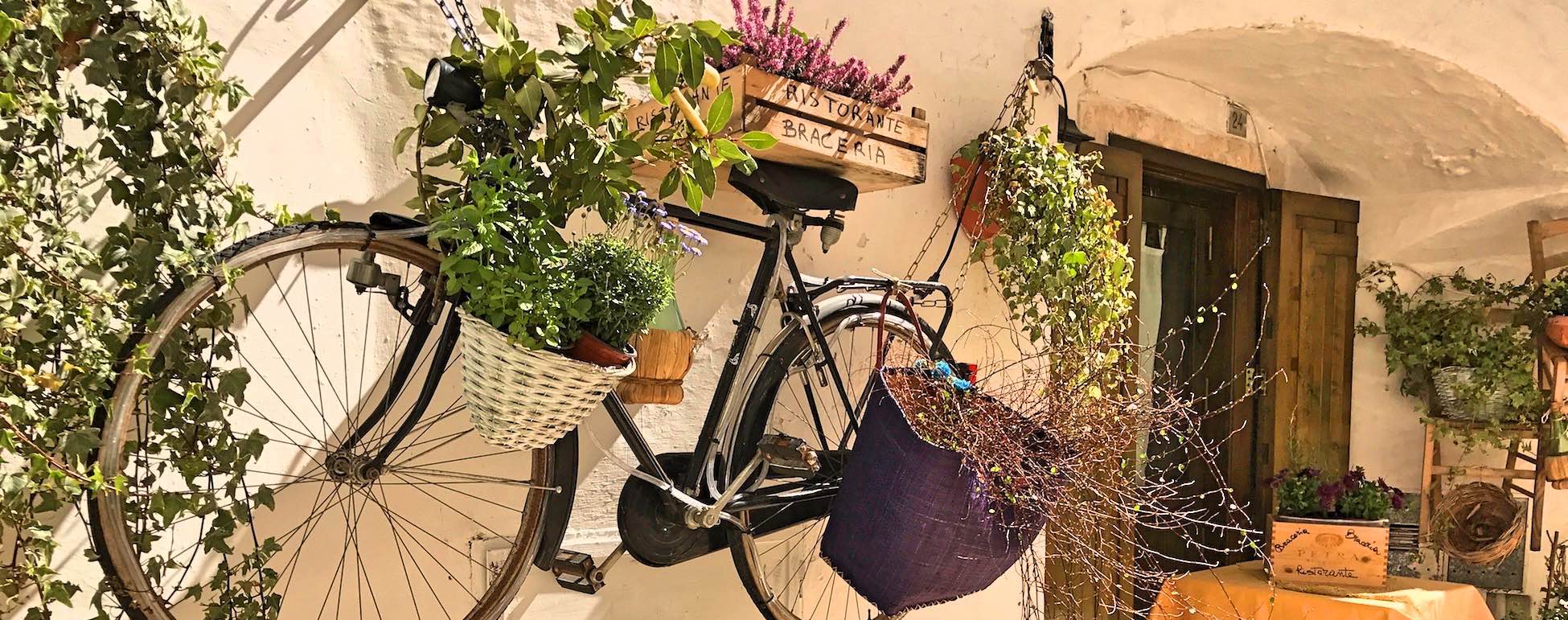

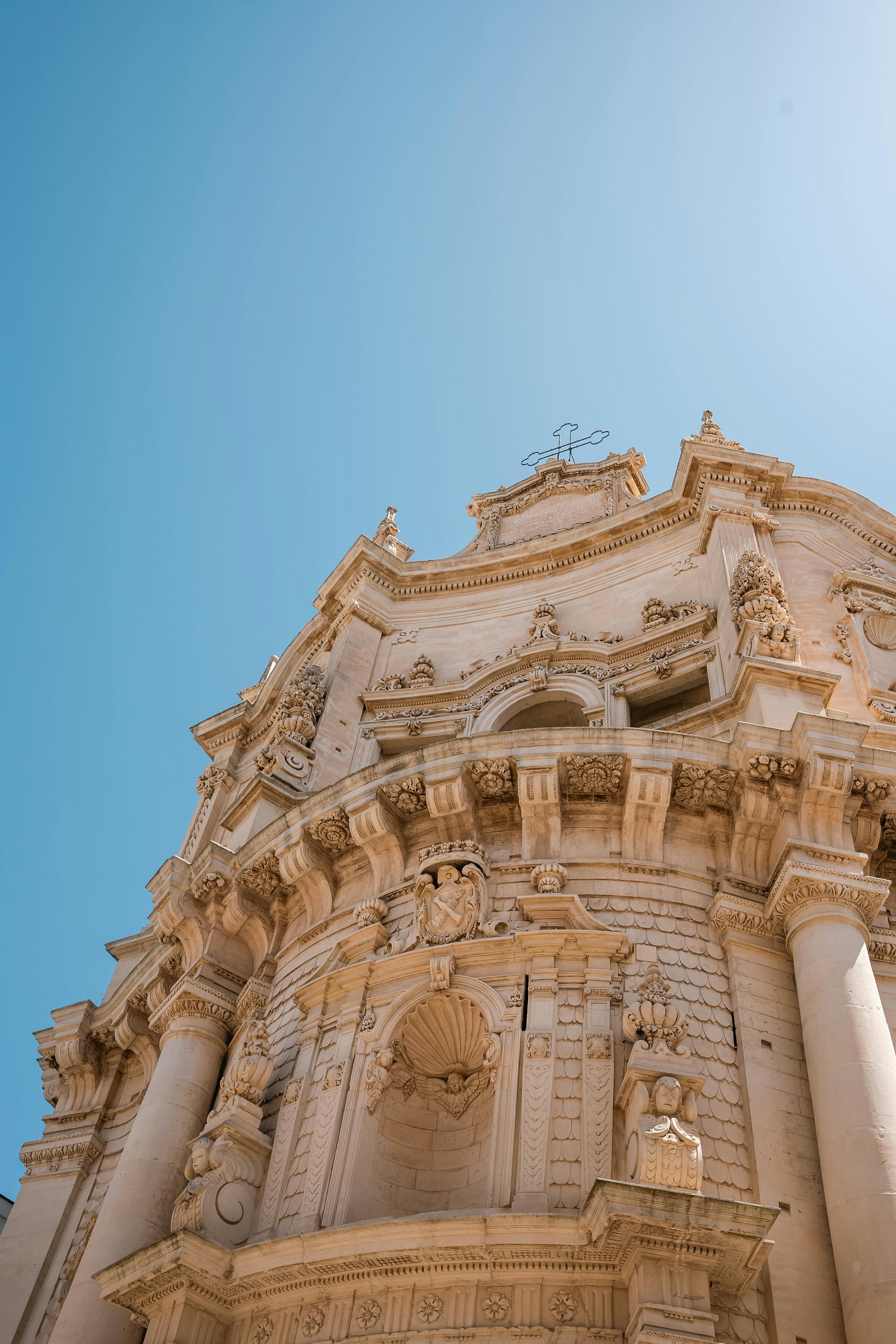
Lecce is one of the most fascinating cities in Southern Italy, nicknamed the Florence of the South due to its extraordinary Lecce Baroque: a unique ornamental architecture that blends Spanish, Mediterranean, and Renaissance influences.
Founded during the Messapian era and later developed under the Romans, Byzantines, and Normans, Lecce experienced its golden age in the seventeenth century, thanks to master artists like Giuseppe Zimbalo. Its elegant facades made of pietra leccese (Lecce stone)—sculpted like lace and irradiated by the sun—turn the city into an open-air museum.
You might decide to discover Lecce with one of our tours!
What to See in Lecce
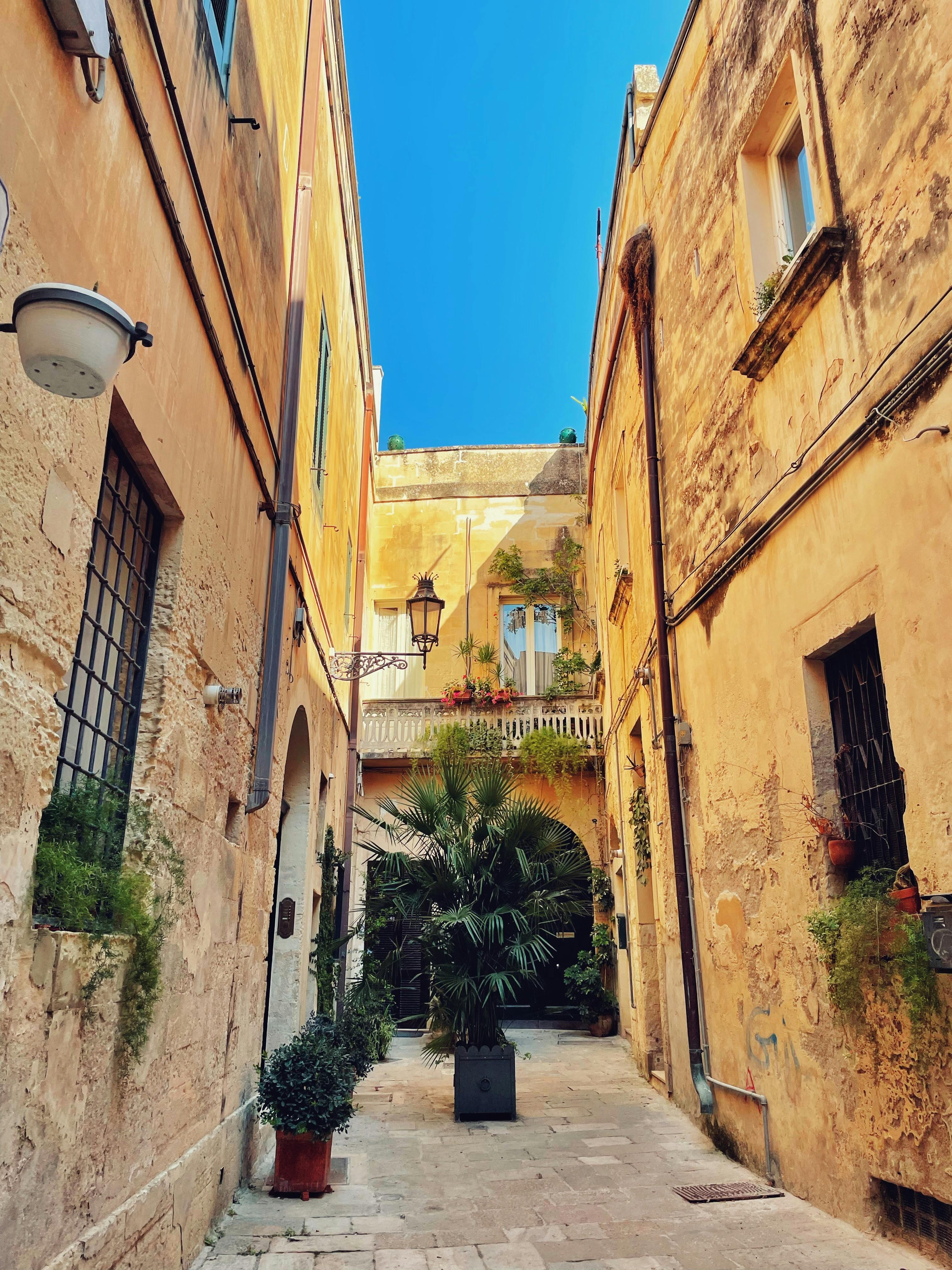
Visiting Lecce means immersing yourself in a city suspended in time, where every church and palace tells stories of light and stone. The historic center is a tapestry of harmonious squares, sculpted portals, and flower-filled balconies that offer glimpses of pure beauty.
Piazza del Duomo and Lecce Cathedral
The Baroque heart of the city is Piazza del Duomo, one of the most elegant squares in Italy. Standing here are the Cathedral of Maria Santissima Assunta, the Bell Tower, the Bishop's Palace, and the Seminary. The Cathedral, rebuilt in 1659 by Giuseppe Zimbalo, enchants visitors with its imposing facade and interiors rich with Baroque altars. From the 70-meter-high bell tower, the view stretches all the way to the Adriatic Sea.
Basilica of Santa Croce
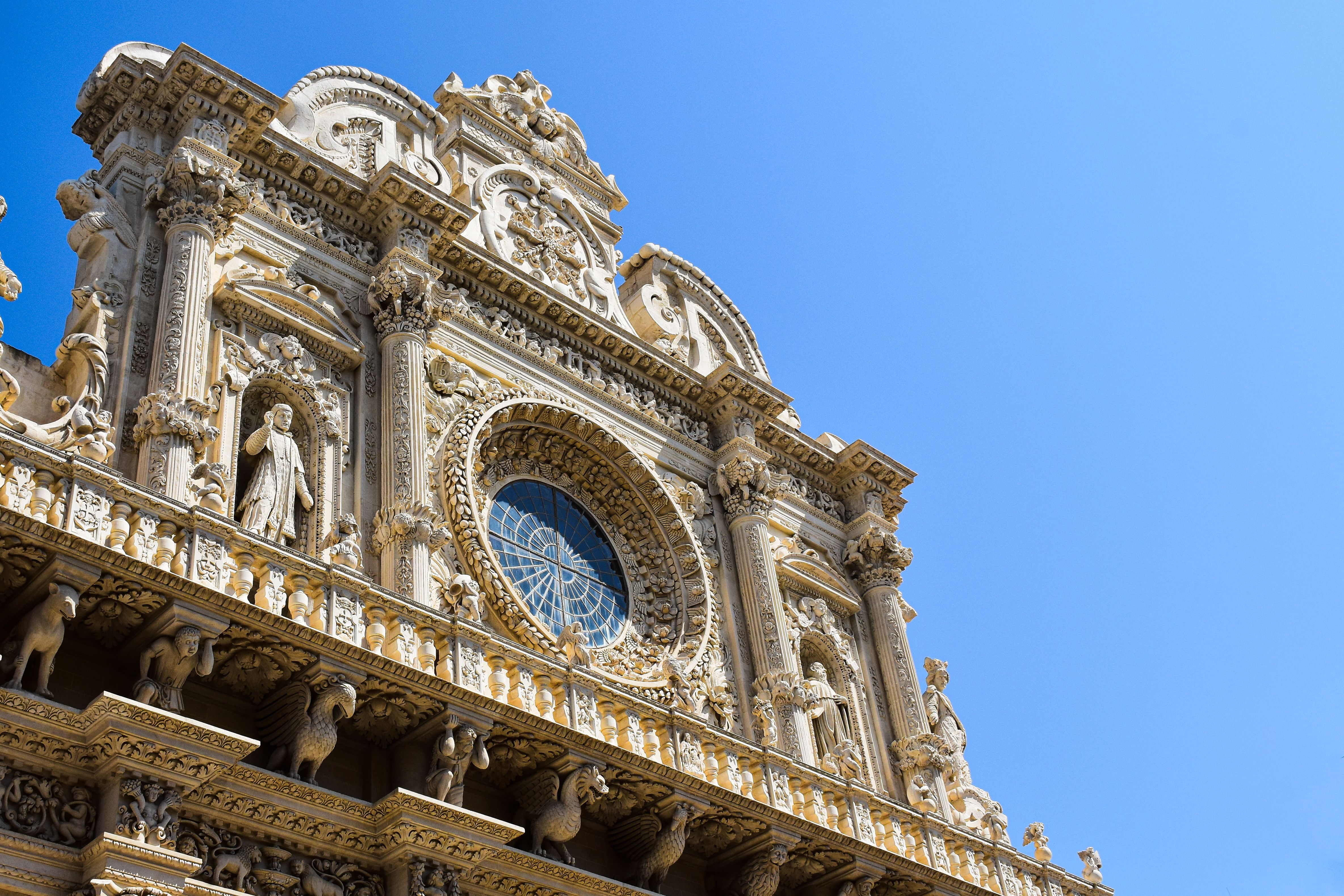
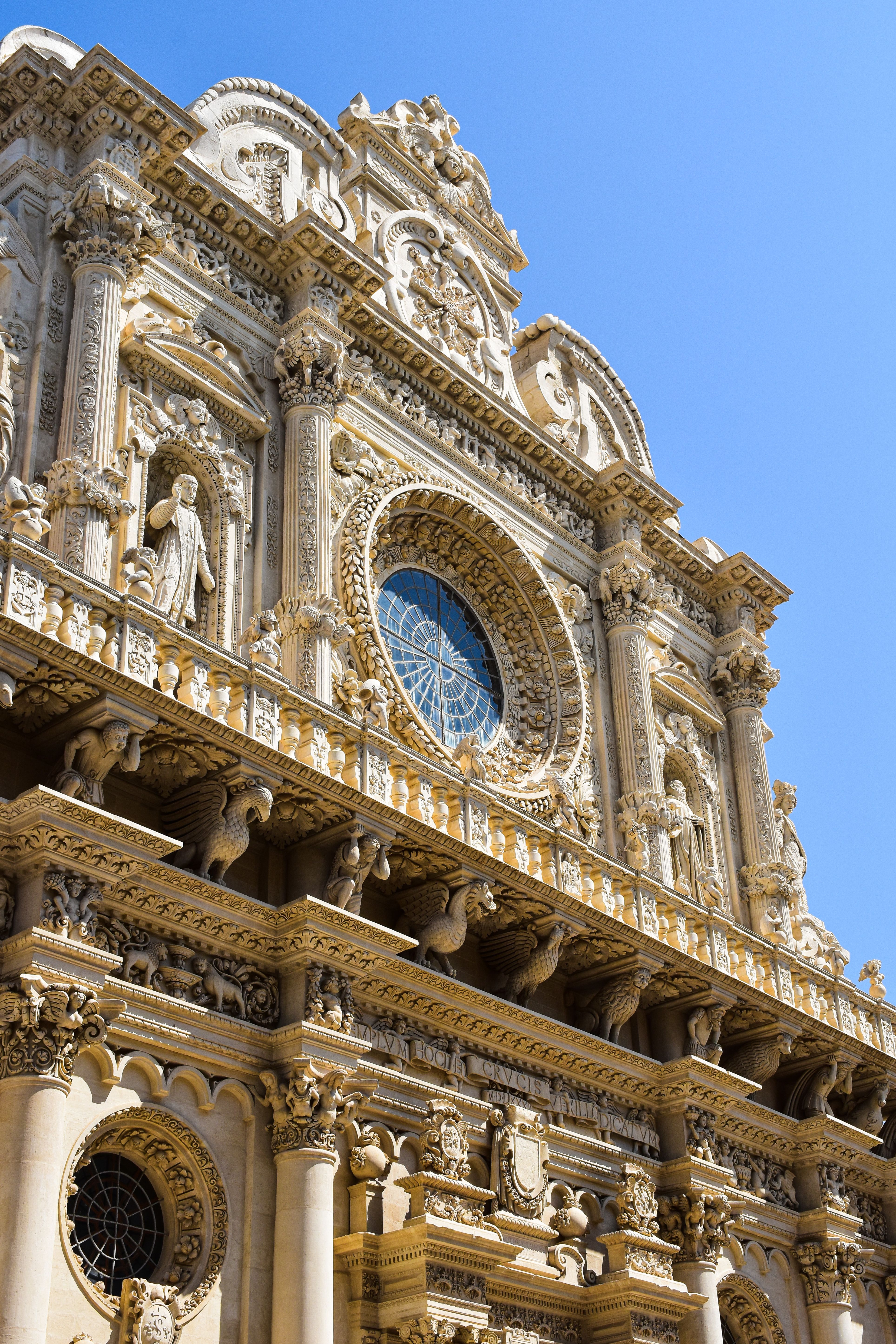
The ultimate emblem of Lecce Baroque, the Basilica of Santa Croce amazes with its facade sculpted with garlands, mythological figures, and animals, crowned by a large rose window. Inside, the naves house refined altars and decorations that showcase the mastery of local artisans.
Roman Amphitheater and Piazza Sant’Oronzo
In the heart of the modern city, Piazza Sant’Oronzo welcomes the remains of the Roman Amphitheater from the 2nd century AD, which could host up to 25,000 spectators. Next to it stands the Column of Sant’Oronzo, the city's patron saint, which was a gift from the city of Brindisi in the 17th century. The square, bustling with cafes and street markets, is the favorite meeting point for locals and tourists alike.
Castle of Charles V and the Roman Theater
A few steps away lies the Castle of Charles V, an imposing 16th-century fortress that today hosts exhibitions and events, as well as the Papier-Mache Museum (Museo della Cartapesta), dedicated to the craft that made Lecce famous worldwide. Hidden among the buildings, the Roman Theater—discovered in 1929—is an archaeological gem that hosts plays and theatrical festivals during the summer.
Porta Napoli, Porta Rudiae and Porta San Biagio
The ancient gates of Lecce mark the entrance to the historic city: Porta Napoli (1548) dedicated to Charles V; Porta Rudiae, the oldest and most majestic; and Porta San Biagio, decorated with the Habsburg coat of arms. They are the perfect thresholds to begin a stroll through the Baroque alleys.
What to Do in Lecce and Its Surroundings – The Slow Active Tours Proposal
Experiencing Lecce means slowing down and savoring its atmosphere made of light, art and Mediterranean scents...
Museums and Culture
Lecce is a city to be explored indoors as well, through its museums and exhibition spaces that tell an ancient, layered, and fascinating history. The cultural journey can begin at Sigismondo Castromediano Museum, the oldest public museum in Puglia. Its rooms hold precious Messapian and Roman artifacts, as well as artworks that bear witness to the Salento school of painting, offering visitors a continuous narrative bridging archaeology and modern art.
Faggiano Museum is located just a few steps from the center. This place was born entirely by chance during domestic renovation works that uncovered an incredible underground heritage. Today, among secret staircases and hypogeum spaces, you can admire evidence of over two thousand years of history, from the Messapians to the Knights Templar, on a journey that excites and surprises.
For those who want to delve deeper into the city's history, the Historical Museum of the City of Lecce - MUST is an unmissable stop. Housed in an ancient convent complex, it takes visitors on a journey through Messapian, Roman, and medieval Lecce, featuring temporary exhibitions that intertwine the past with the contemporary. Completing this itinerary, the Jewish Museum is located in the old Jewish quarter (Giudecca). It preserves the memory of Lecce's medieval Jewish community, offering a narrative of coexistence, cultural exchange, and spirituality.
However, the true soul of Lecce is discovered in the papier-mache workshops, where master artisans mold sacred and folk figures out of paper and glue. Visiting these workshops, often hidden in the alleys behind Piazza Duomo, is like entering small theaters of the imagination, where manual craftsmanship becomes living art.
Authentic Experiences
Discover Lecce through its papier-mache craft, where masters shape sacred and popular figures. Many workshops offer hands-on classes open to visitors..
In the evening, enjoy a concert or a show in the historic theaters: the Politeama Greco, Apollo, and Paisiello are true city institutions.
Nature and Surroundings
Just a few kilometers from the city center, the Bosco e Paludi di Rauccio Regional Natural Park offers trails immersed in Mediterranean scrub, including holm oak groves, reed beds, and wetlands. Also not to be missed is the Cerrate Abbey, a FAI property, a refined example of Apulian Romanesque architecture decorated with Byzantine frescoes.
Festivals and Local Events
Lecce is not just a city of art, but also of festivals, traditions, and community gatherings that express the authentic soul of Salento.
The Fair of Puppets and Shepherds is one of the most deeply felt events and among the oldest in the city. Originating in the 16th century, it is a celebration of craftsmanship and popular devotion. In the weeks leading up to Christmas, workshops display papier-mache and terracotta figures, small nativity scenes, angels, and shepherds crafted according to 18th-century traditions. It is the perfect opportunity to breathe in the Christmas atmosphere and discover the talent of local artisans.
During the summer, Lecce transforms into a grand stage to honor the city's patron saint, Sant'Oronzo. At the end of August, light illuminations, solemn processions, marching bands, and fireworks color the Salento nights, creating an atmosphere of joy and sharing that brings together locals and tourists. The streets fill with aromas, music, and sounds, uniting popular faith with art and beauty.
With the arrival of spring, the city reveals a more intimate and refined side. During Cortili Aperti, the historic palaces of the center open their hidden gardens to visitors. It is a rare opportunity to admire Baroque interiors and private cloisters, often accompanied by live music, exhibitions, and family stories. During these days, Lecce reveals its most secret soul, made of stone, greenery, and domestic memory.
Typical Dishes of Lecce
Lecce's cuisine is an absolute must-try triumph of authentic flavors and peasant traditions. It is a symphony of flavors—a tradition that blends simple, genuine ingredients with a distinctly Mediterranean creativity.
Strolling through the alleys of the center, the smell of freshly baked bread invites you to stop and taste a puccia salentina, the typical round bread stuffed with cured meats, cheeses, or grilled vegetables, perfect for a quick yet flavor-packed lunch.
Another gastronomic symbol of the city is the rustico leccese, a fragrant puff pastry filled with mozzarella and tomato, crispy on the outside and creamy on the inside. Those who love authentic flavors cannot miss out on friselle, seasoned with fresh tomatoes, olive oil, and oregano, or a dish of orecchiette con cime di rapa (turnip greens), simple yet irresistible.
In the downtown trattorias, you can also taste bolder specialties like pezzetti di cavallo in umido (stewed horse meat pieces), tender and flavorful, or sagne ’ncannulate, a rolled pasta that perfectly catches the thick Salento tomato sauce. Alongside seafood dishes, Lecce also offers rustic peasant flavors like polpette di pane (bread meatballs), prepared with stale bread, cheese, and homegrown herbs—a humble dish rich in history and sentiment. To wrap things up on a sweet note, you cannot miss a pasticciotto leccese, with its golden crust and warm custard heart, perfectly paired with a Caffè Leccese (espresso served over ice with almond milk). Sitting in a historic café in Piazza Sant’Oronzo or along Via Palmieri and enjoying this combination under the afternoon sun is a ritual that encapsulates the very essence of Lecce life: sweet, slow, and full of flavor. Some of the most popular restaurants and trattorias in the historic center can be found around Piazza Sant’Oronzo and Porta San Biagio, where traditional recipes meet warm Salento hospitality.
Where to Eat and Drink in Lecce
Here are some suggestions from the area:
Trattoria Angiulino in Via Principi di Savoia 24. This is the trattoria in Lecce—unique, authentic, and untouched by modern times. It offers a typical menu with simple and hearty portions. Highlights include pezzetti di cavallo a pignata (terracotta-pot stewed horse meat) and fave e cicorie (fava bean purée with chicory). The venue is small but highly renowned among both locals and tourists, so booking ahead is strongly recommended.
La Scarpetta Hostaria - in Via Principi di Savoia 45. Mediterranean cuisine and local recipes served within the splendid, high-vaulted rooms of a 16th-century palace. It features an enchanting garden, an open kitchen, high-quality products, and fresh seafood..
Vico dei Sotterranei - in Vicolo Sotterranei 3. Tucked away behind the cathedral, immersed in the alleys of the wonderful historic center. It boasts a great atmosphere alongside fast and courteous service. The menu features just a few select items, focusing on simple, tasty local dishes made with carefully sourced ingredients. In addition to wines, the list also includes local craft beers.