
Agrigento is certainly one of the best-known and most visited cities in Sicily. For history and archaeology enthusiasts, ancient Akragas is undoubtedly an ideal destination, as every corner of the city evokes a rich past and the peoples who made Agrigento one of the most important cultural centres of its time.
The city went through a long period of tyranny until it was occupied by the Romans in 262 BC, and from that moment onwards it shared the same fate as Sicily.
At the suggestion of writer Andrea Camilleri, since 2016 the historic centre of Agrigento has officially been referred to by the city's ancient Norman name: Girgenti. The historic centre of Agrigento stretches across the hill of the ancient city, where evidence of Arab-Norman art can still be clearly seen.
What to see in Agrigento
Agrigento is rightly considered an open-air museum of extraordinary beauty.
Why not spend a carefree day discovering the beauty of this fascinating town in Sicily?
If you want to spend a day in Agrigento, we have prepared a list of the things to see and visit at your leisure:
- Cathedral of San Gerlando
- Church of Santa Maria dei Greci
- Palazzo Steri
- Valley of the Temples
And now, let's discover together the most distinctive places in Agrigento!

Cathedral of San Gerlando
The Latin cross-shaped structure, consisting of three naves separated by fine pointed arches, is the result of nine centuries of transformations in which, alongside the Norman style, the Gothic-Chiaramonte style typical of Sicily was also introduced. The original building was in fact constructed in the Arab-Norman style at the request of the Bishop of Agrigento, Saint Gerland of Besançon, to whom the cathedral is dedicated. In the 14th century, the Chiaramonte family, who ruled Agrigento, had the cathedral rebuilt, giving the structure its present appearance.
The urn of San Gerlando is kept in the right nave and is solemnly carried in procession in honour of the city's patron saint.
Church of Santa Maria dei Greci
The church, built between the 12th and 14th centuries, stands on the remains of a 5th-century Doric temple, in an area corresponding to the acropolis of ancient Akragas. On the rather simple façade, an elegant Gothic portal decorated with a bas-relief frieze stands out. Inside, only two examples of a 14th-century fresco cycle can still be fully appreciated. A series of transparent panels set into the floor also reveal the remains of the foundations of the ancient temple. The church is also known by this name because it was frequented by a community of Greek religious figures who came to perform Orthodox rites.
Palazzo Steri
The palace, dating back to the 14th century, was the residence of the Chiaramonte family, who came to Italy following the Normans and ruled over the fief of Agrigento. Since the 17th century, the original structure of the palace has undergone alterations, additions and transformations, which have always made it difficult for the local community to identify it as a symbol of the city.
What is certain is that Manfredi Chiaramonte, while building the Palazzo Steri of the same name in Palermo, obtained a property from the Bishop of Agrigento north of the city, near the Cathedral, where Palazzo Steri now stands.
Valley of the Temples
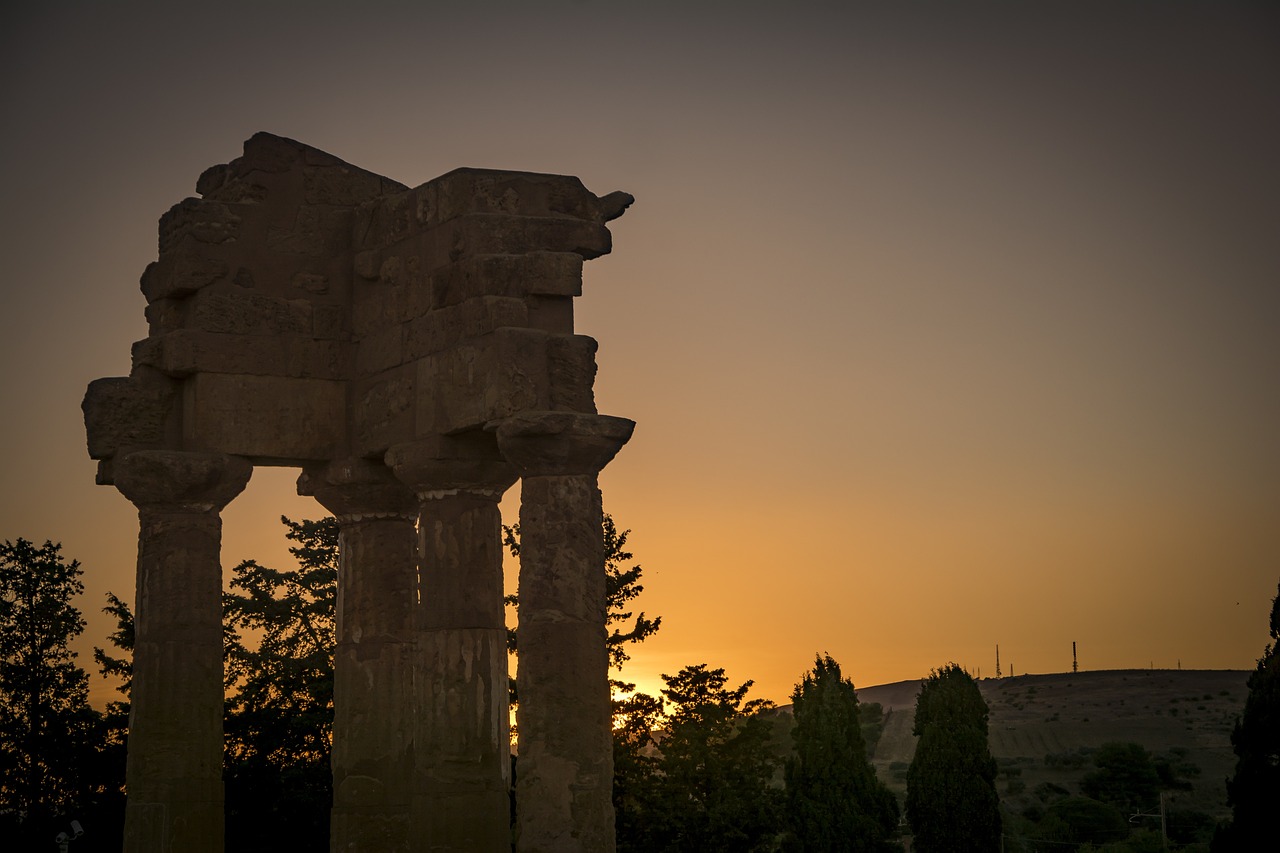
Guardians of their own uniqueness, the temples of Agrigento attract millions of visitors from all over the world every year. Today, as in the past, their imposing presence and grandeur blend perfectly with the surrounding landscape, becoming an integral part of it. A walk through the Valley of the Temples is like stepping into the extraordinary grandeur of ancient Greece. The Temple of Concordia is perhaps the best-known and most photographed building in the entire Valley and throughout the ancient Greek world. The temple, dating back to around the middle of the 5th century BC, features a Doric colonnade with almost all the decorative elements of the entablature still preserved. Little remains of the other temples that make up the valley, but enough survives to give an idea of the grandeur that visitors nearly 2,000 years ago would have experienced. This is also the case with the Temple of Zeus, of which only a few elements remain today, although at the time of its construction it stood on columns almost 20 metres high. To get an even better idea of its original scale, it is possible to admire one of the 7-metre-high telamons that once adorned the temple.
What to do in Agrigento - the Slow Active Tours proposal
Once you have discovered the hidden wonders among the narrow streets of Agrigento, it is time to immerse yourself in the sounds and aromas of this ancient town.
-
Regional Archaeological Museum "Pietro Griffo"
The "Pietro Griffo" Regional Archaeological Museum is one of the most important in Italy. It houses 5,688 artefacts found both in the Agrigento area - such as the statue of the Ephebe - and throughout the ancient world.
-
Scala dei Turchi
Scala dei Turchi is located just a few kilometres from Agrigento and is undoubtedly one of the most fascinating destinations in the area, a spectacular synergy of natural elements that have shaped its form. It is a cliff smoothed by the wind and sea, with an undulating and irregular profile and soft, rounded shapes. Its distinctive pure white colour derives from the presence of a particular type of mineral.
The name is said to derive from the activity of Saracen pirates who, during the 16th century, used the rock formation as a landing place for their characteristic boats. Its stepped shape, hence the name "Scala", made it easier to moor at a point that was probably little monitored by the local inhabitants. -
Magna Via Francigena: walking from Palermo to Agrigento
Slow Active Tours offers an exciting and engaging walking journey to discover the hidden beauty of Sicily from north to south, from the Tyrrhenian Sea to the Mediterranean Sea.
Are you reading the article and already looking forward to visiting Agrigento and Sicily?
Discover our travel proposals and set off on your next adventure!
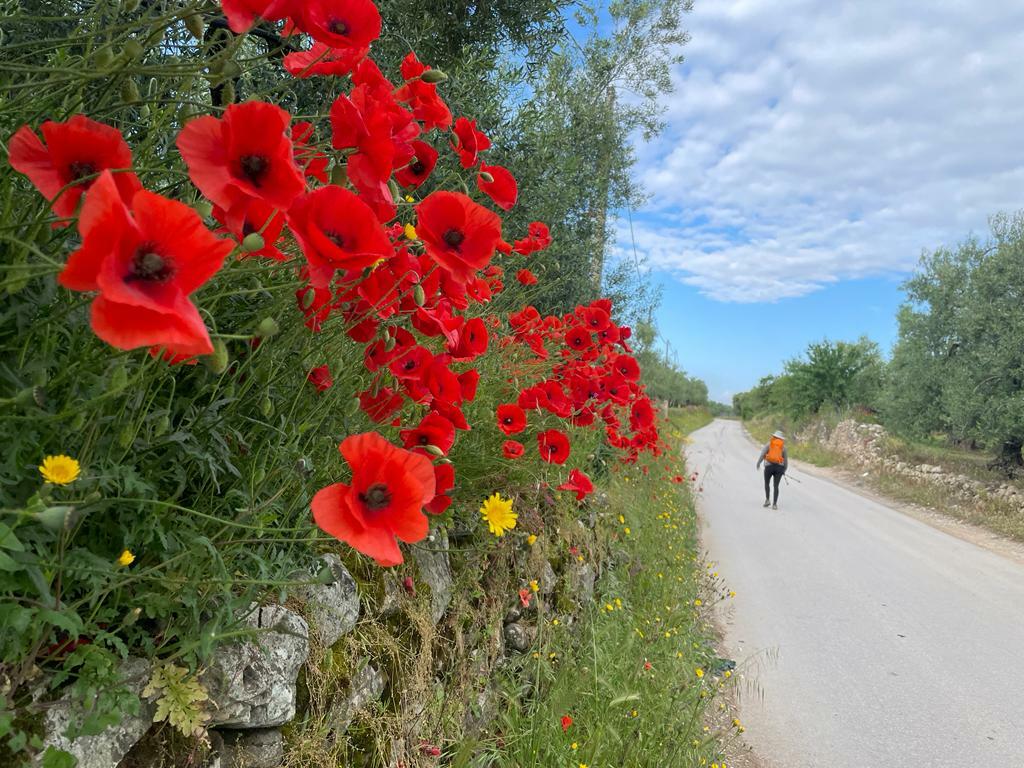
Magna Via Francigena
from Palermo to Agrigento
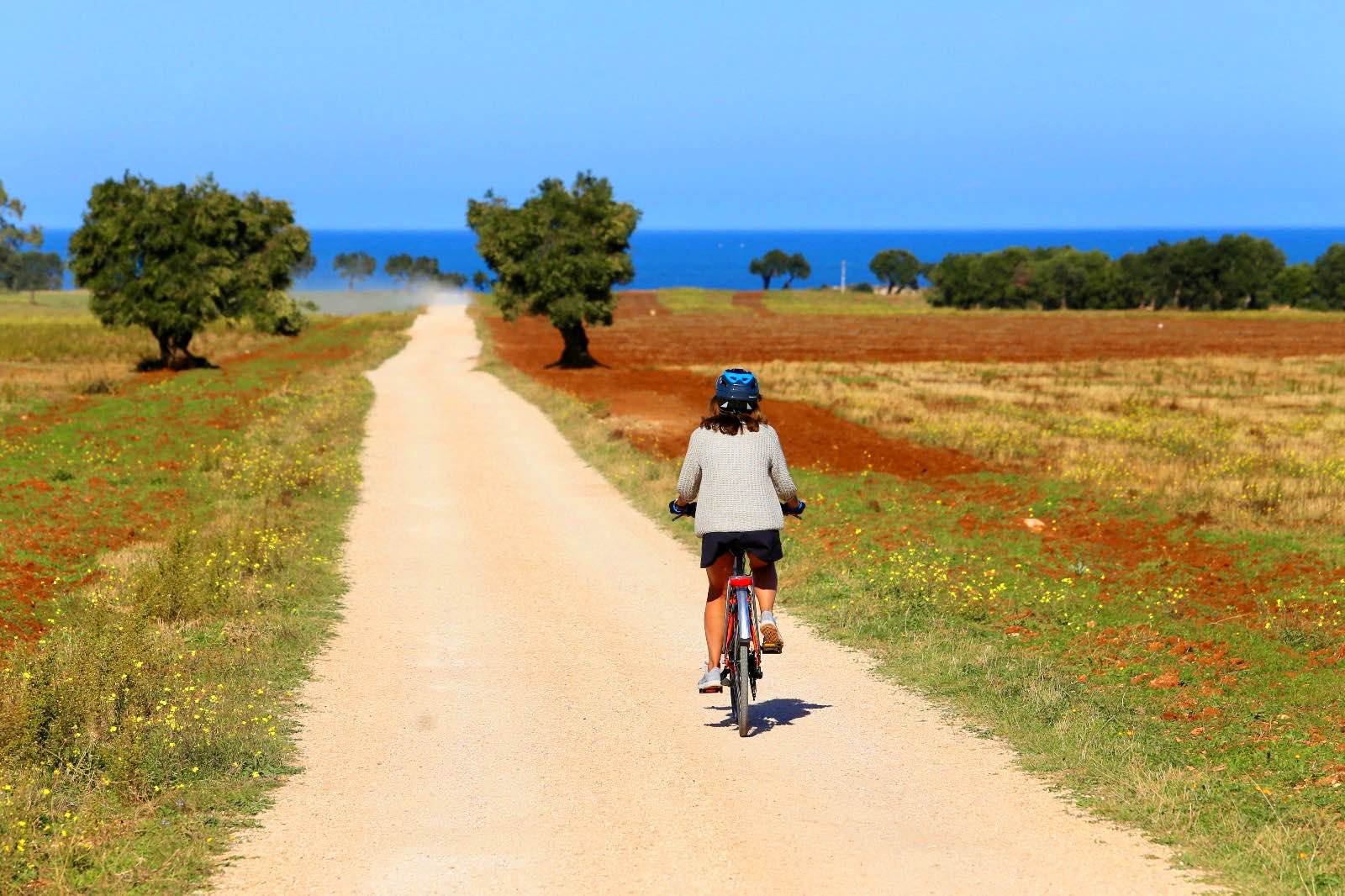
Magna Via Francigena
complete tour
Festivals and Popular Events in Agrigento
One of the most eagerly awaited and fascinating events in Agrigento and the Valley of the Temples is undoubtedly the Almond Blossom Festival. This celebration is dedicated to the beauty of almond blossoms and the sense of wonder they create when they begin to bloom in the first days of February, when an explosion of white and pink petals transforms the Agrigento landscape into a fairytale setting. On this occasion, Agrigento becomes a melting pot of different ethnicities and peoples: every year, many folk groups from all over the world gather here wearing traditional costumes in an embrace that involves the whole of Sicily.
Typical Dishes of Agrigento
Traditional Agrigento cuisine reflects the city's coastal character and pairs perfectly with its mountainous landscape. Legumes are widely used; macco di fave, for example, is a simple peasant dish traditionally served to workers at the end of each harvest. The long cooking of the broad beans gives the dish a wonderfully creamy texture, making it extremely versatile.
Cavatelli al cartoccio is one of the dishes made with one of Sicily's typical ingredients: aubergines, and it is a staple of Sunday lunches.
For fish lovers, minestra i Sicci is ideal! Its main ingredient is cuttlefish, usually accompanied by fresh peas.
Eating and Drinking in Agrigento
Here are some local suggestions:
Concordia on Via Porcello, 8. A small, informal restaurant serving traditional dishes, with friendly and attentive staff. The space is limited but welcoming, furnished in the style of a traditional trattoria.
Ristorante Sal8 on Via Cesare Battisti, 8. A delightful restaurant in the centre of Agrigento, near Via Atenea, specialising in seafood dishes. A few suggestions? Don't miss the seafood starters, both raw and cooked, as well as the spaghettoni with red prawns and pistachios.
Pititto Ristorante in Piazzetta Vadalà, 2. A restaurant in the centre of Agrigento, set in a welcoming little square. It mainly serves seafood, but also offers a wide choice of meat-based first and second courses.
So, what are you waiting for? Backpack on and off we go!