
Altamura is a small town in the province of Bari, known throughout the world for its delicious Pane di Altamura DOP, its IGP lentils, and its extraordinary contribution to human history thanks to the discovery of the only complete human skeleton remains from the Palaeolithic belonging to Homo neanderthalensis.
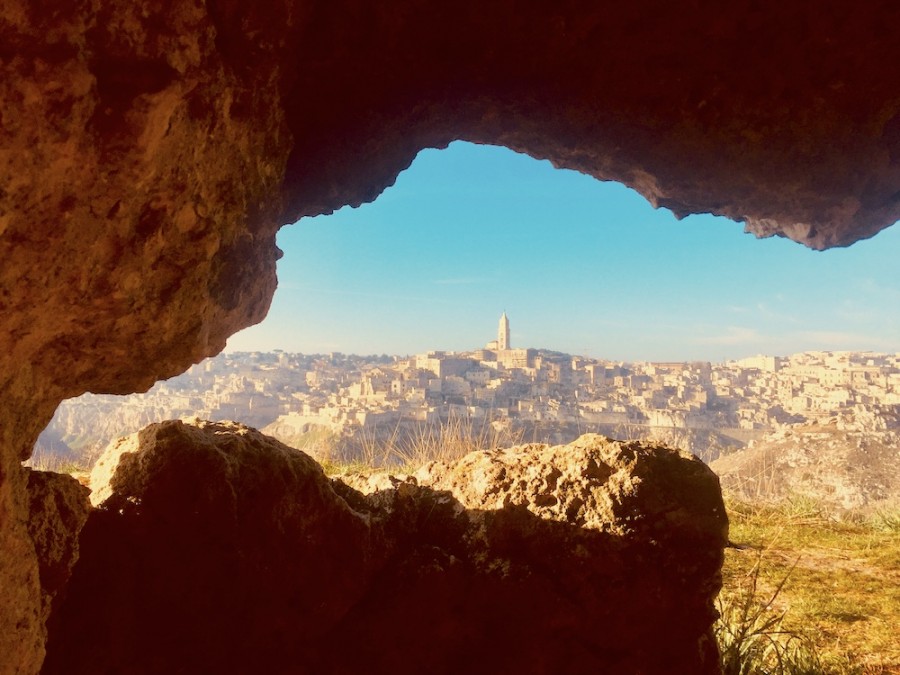
The origins of Altamura date back to the Palaeolithic, when populations of Neanderthals settled in the surrounding area, characterised by the presence of caves whose formation was made possible by the malleability of the karst terrain.
The city is inextricably linked to the name of Frederick II, who, finding a ruined town, decided to repopulate the settlement by asking farmers from neighbouring villages to move to the area, granting them privileges in return.
What to see in Altamura
We have prepared a list of the things not to miss in Altamura to fully enjoy the beauty of this fascinating town nestled in the Apulian Murgia. Why not dedicate a day to discovering its treasures?
- Altamura Cathedral;
- Palazzo Baldassarre;
- Piazza Duomo;
- Altamura Dinosaurs (yes... real dinosaurs!).
And now, let's discover together the most fascinating places in Altamura!
Altamura Cathedral
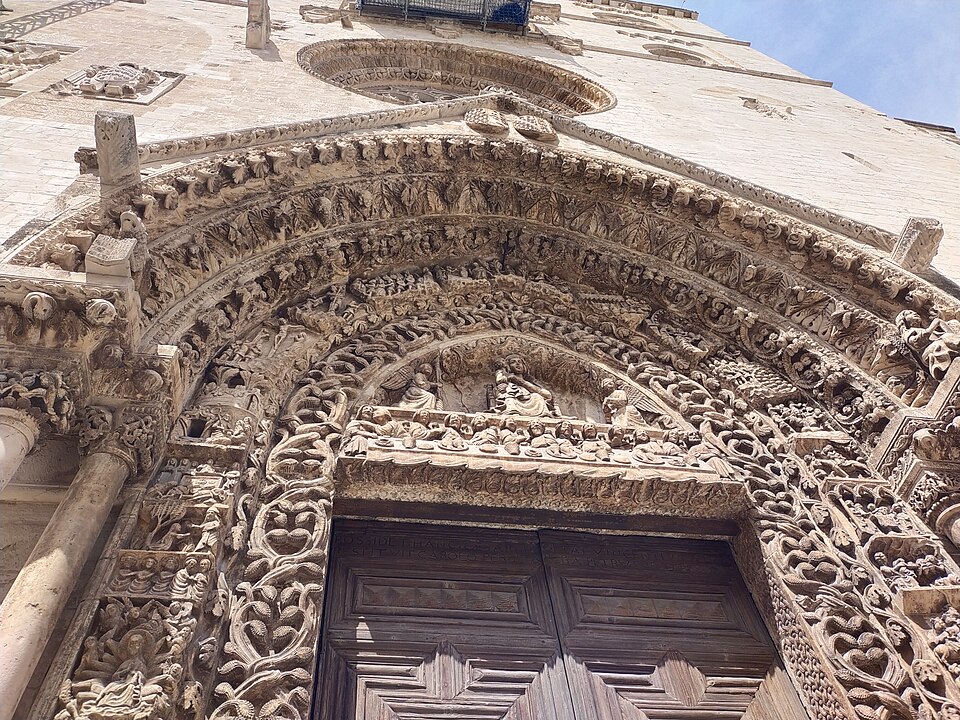
The Cathedral of Santa Maria Assunta dates back to 1232, when it was built at the request of Emperor Frederick II. The Gothic church, with its pointed arches, is in fact the first and oldest monument in Altamura.
What makes it particularly distinctive, however, is that it was built on the site of an ancient pagan temple dating back to the Saracens, whose remains can still be seen.
It features two symmetrical bell towers, built in different periods, which can be seen even from outside the city. The interior, on the other hand, is more austere, with three naves and a wooden ceiling decorated with gold stucco. Of particular interest is the marble altar at the end of the central nave, featuring a depiction of the Assumption of the Virgin.
Palazzo Baldassarre
Walking through the streets of Altamura, you cannot fail to notice Palazzo Baldassarre, one of the city's finest examples of civil architecture. It was built between the end of the 16th century and the beginning of the 17th century by the Baldassarre family, who also made numerous alterations over the years. The palace remained the family's private property until 1900, when it passed into public ownership.
Today, the palace houses an information point and a museum exhibition dedicated to human evolution. Here, visitors can admire the fossilised skeleton of the Altamura Man, one of the most important discoveries dating back to the Palaeolithic, as it is the oldest Neanderthal on which paleogenetic analyses have been possible.
Piazza Duomo
Walking through the historic centre of Altamura, you will find yourself in Piazza del Duomo, or Piazza Duomo: the city's beating heart. In 1494, Frederick of Aragon decided to purchase and demolish several houses in order to create an open space, which today is the favourite meeting place for locals who enjoy strolling along the main street or having something to eat and drink in the surrounding bars and cafés.
Altamura Dinosaurs
On 10 May 1999, a group of geologists carrying out sedimentological research discovered thousands of footprints on the surface of Cava Pontrelli. The palaeontologist Umberto Nicosia was immediately informed of this important discovery and recognised them as dinosaur footprints dating back approximately 85 million years. Over the years, this exceptional discovery has led to the creation of a project, the Altamura Dinosaurs, dedicated to the recovery, enhancement and preservation of the site and its footprints.
What to do in Altamura - the Slow Active Tours proposal
Once you have discovered the hidden wonders among the narrow streets of Altamura, it is time to immerse yourself in the sounds and aromas of this ancient town. For this reason, we have prepared a list of things to do in Altamura that you absolutely should not miss!
-
Il Pulo
Il Pulo di Altamura is one of the largest closed karst depressions in the Murge area. The basin lies at 477 metres above sea level and has a maximum diameter of approximately 500 metres. Over the years, there has been much speculation about the origins of Il Pulo, but the most likely theory is that the depression was created by the effect of rainwater on the limestone terrain of the Murge. This karst landscape gave rise to numerous caves that were home to Neanderthals during the Palaeolithic.
A truly unmissable destination for all lovers of trekking and walking holidays! -
MUDIMA - Museo Diocesano Matronei Altamura
In the centre of Altamura, right inside the cathedral, you can visit MUDIMA, the Museo Diocesano Matronei Altamura, established in 2016 by Monsignor Giovanni Ricchiuti. The museum occupies the upper floors of the cathedral and aims to preserve and display artefacts and statues dating from the Middle Ages and the later 15th and 16th centuries. Inside, visitors can also find and consult relics and notarial documents kept in the cathedral.
-
Historic centre of Altamura
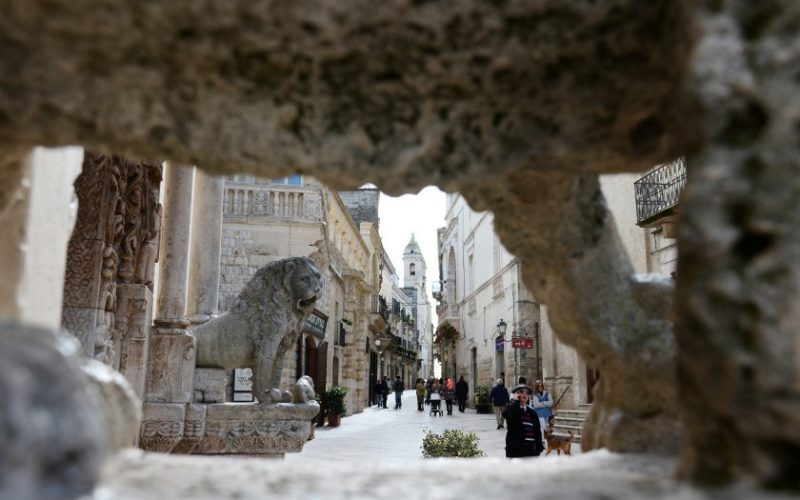
Altamura is a city rich in history and culture, so what better way to explore it than by getting lost in the streets and alleyways of the area? The city offers fascinating attractions and excellent opportunities for every type of visitor, young and old. You can also take the opportunity to taste the delicacies Altamura has to offer in one of the many bakeries found throughout the city.
-
Cammino Materano
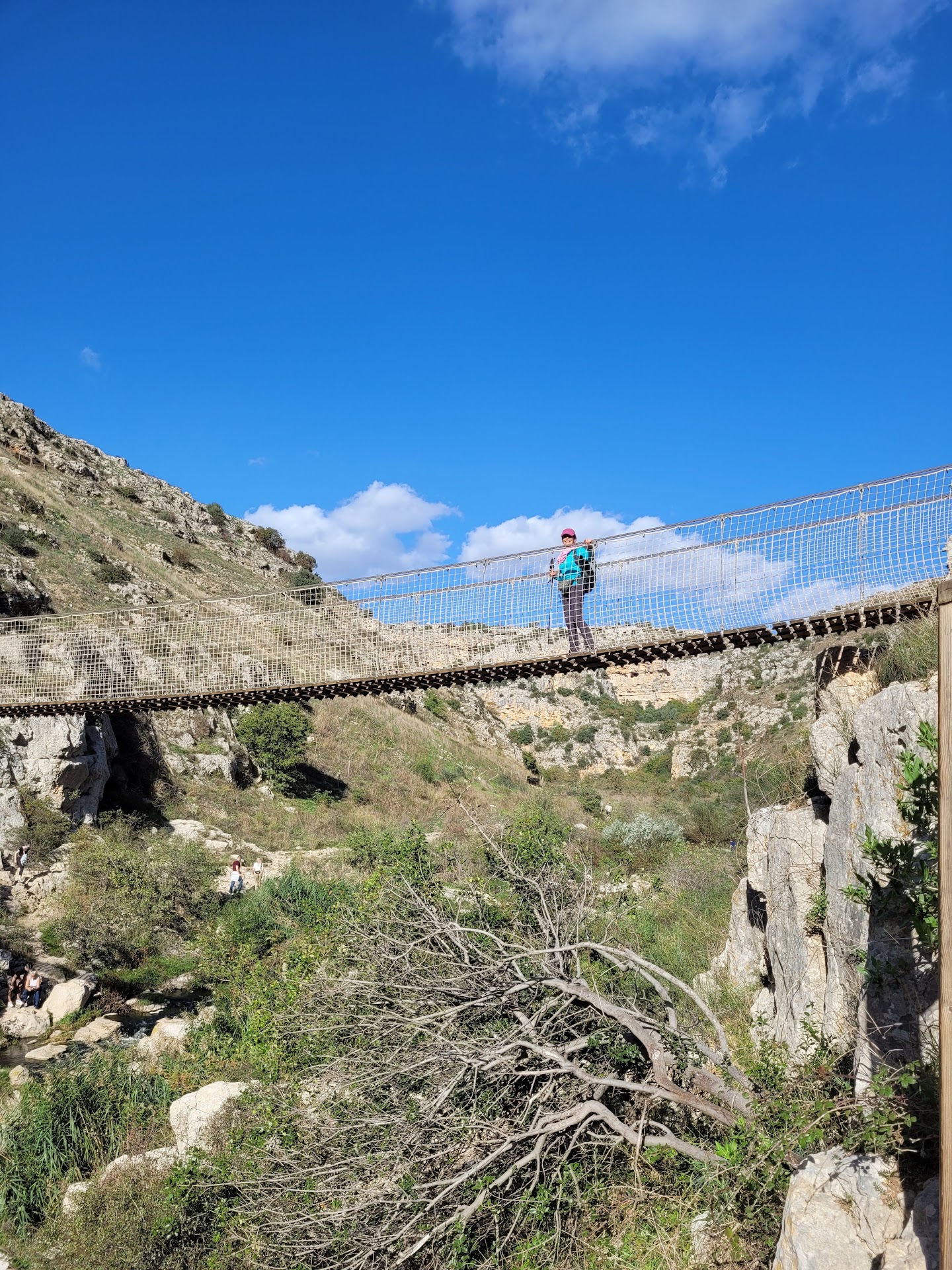
For all trekking enthusiasts, but also for those who want to challenge their own limits, the Cammino Materano is the perfect choice. It is a wonderful walking route connecting the cities of Matera and Bari and, guess what? It passes right through Altamura! So you have no more excuses: backpack on and off we go for a wonderful journey in a group or even independently!
Are you reading the article and already looking forward to visiting Altamura?
Discover our travel proposals and set off on your next adventure!
Trekking from Matera to Lecce
group trip in the Heel of Italy
Cammino Materano on foot
from Bari to Matera

Complete Cammino Materano from Bari to Matera
9 days from Bari to Matera
Festivals and Popular Events in Altamura
If you are in Altamura in September, you absolutely must not miss the Sui sentieri del fungo cardoncello festival. This is an event where the best chefs and most renowned local food companies come together to create delicious dishes according to one simple rule: the cardoncello mushroom must be the star of the show!
Between 12 and 14 October, don't miss Le Vie Del Pane, an event promoting the DOP product that symbolises the Murge and bringing it together with all the DOP products of other consortia, celebrating the excellence of Italian cuisine.
The Feast of Saint Joseph on 19 March is celebrated in the cathedral, from where a procession then sets off through all the streets of the city. On this day, the town is filled with stalls displaying bread that is blessed by the patron saint as he is carried through the city.
Typical Dishes of Altamura
Altamura's gastronomic tradition is closely linked to that of the Murge area, so olive oil, orecchiette and meat feature prominently, with meat often being the main dish of the region. The delicious local dairy products should not be forgotten either.
Another quintessentially typical product of the Murge, now famous throughout the world, is Pane di Altamura DOP. In this area, you can taste this delicacy virtually everywhere, but how can you recognise the genuine article? Authentic Pane di Altamura is made with just four essential ingredients: re-milled durum wheat semolina flour, sourdough starter, salt and water. The finished loaf has a golden appearance, characterised by the typical “accavallature”, with a crust approximately three millimetres thick and a regular, soft crumb. And, of course, its aroma is unmistakable. Pane di Altamura has a very ancient history; Pliny himself described it as the “best bread in the world”. In the past, bread was kneaded privately at home and then baked in public ovens, where each family marked its loaf to recognise it. Today, Pane di Altamura is sold throughout virtually all of Italy in the traditional “Accavallata” and “Cappello di Prete” shapes, and is sold fresh in loaves weighing at least 500 grams. Today, Traditional Alta Murgia Bread is a Slow Food Presidium.
A tasty and wholesome product that you absolutely must try — you won't regret it!
Eating and Drinking in Altamura
Among the many restaurants in the centre of Altamura, here are a few that we recommend visiting:
Ristorante-pizzeria Binario 24, at Piazza Stazione 24. Excellent dishes and outstanding pizza make Binario 24 one of the best-known restaurants in Altamura. The delicious food is complemented by an excellent and extensive wine list. What can we say? The perfect place to enjoy a pleasant evening dedicated to good food;
Il Teatro del Gusto, at Piazza Mercadante, 9. A small and elegant bistro in the heart of Altamura. Here you can enjoy a variety of gourmet sandwiches and Roman-style pinse, as well as numerous pasta dishes and quality meats. The real highlight of the restaurant is undoubtedly its friendly staff, who make every meal a pleasure;
Panificio Di Gesù, at Via Eleonora de Fonseca Pimentel 17. At this bakery just outside the historic centre, it is said that you can find the best focaccia in Altamura. You can also try the famous Pane di Altamura and countless delicious baked goods. At this point, descriptions would be superfluous — the only thing left to do is taste them!
Altamura is waiting for you with a perfect blend of art and flavour!