
Manduria, an ancient Messapian city in the heart of Salento, is a destination rich in history, culture and natural beauty.
Known worldwide for Primitivo di Manduria, one of Puglia’s most prestigious wines, the town also attracts visitors with its white sandy beaches, crystal-clear sea and Mediterranean landscapes along the Ionian coast.
Manduria’s strategic position between the Salento hinterland and the Ionian Sea made it a contested and historically important place over the centuries. It was the proud rival of Spartan Taranto, and it was here, beneath its walls, that the Spartan king Archidamus III was killed in 338 BC, during one of the most important conflicts of antiquity.
Throughout its long history, Manduria was inhabited and conquered by different peoples, including the Romans, Byzantines, Goths, Saracens and Normans. Each civilisation left its mark on the area, creating an extraordinary cultural layering that can still be seen today in its monuments, traditions and landscapes.
Visiting Manduria means immersing yourself in a place where archaeology, food and wine, and nature come together: from the ancient Messapian walls to the charming historic centre, from traditional farmhouses to the wild beaches of the Ionian coast, and finally to the wineries where the famous Primitivo di Manduria DOC is produced.
What to see in Manduria
Visiting Manduria means discovering a town where archaeology, history, culture, food and wine come together. Located in the heart of Salento, this ancient Messapian city preserves a unique heritage made up of archaeological sites, historic churches, curious corners of the old town and natural landscapes stretching all the way to the Ionian coast.
Best known as the home of Primitivo di Manduria, one of Puglia’s most appreciated wines, Manduria is an ideal destination for those looking for an authentic experience away from the busiest tourist routes, surrounded by ancient walls, local traditions and fascinating places.
Here are some of the places to see in Manduria while discovering one of the most interesting towns in Salento.
Il Calvario di Manduria
One of the most curious places to see in Manduria is undoubtedly Il Calvario, a unique monument created in 1839 by the artist Giuseppe Renato Greco. The monument represents several scenes from the Passion of Christ. Its most distinctive feature is the collage of small pieces of crockery, pottery, majolica and porcelain that Greco collected from local homes to create it.
Balcone dello Sbadiglio: a curiosity in Manduria’s historic centre
As you walk through the streets of Manduria’s historic centre, you will come across one of the town’s most curious architectural features: the Balcone dello Sbadiglio.
Built entirely in stone in the 18th century, this Baroque-style balcony takes its name from the eleven brackets decorated with floral motifs and the small masks carved underneath, each depicting a different yawning expression.
An unusual detail that makes a walk through Manduria’s ancient streets even more fascinating.
Chiesa della Santissima Trinità e l'antico Quartiere Ebraico
The Mother Church of the Holy Trinity is one of Manduria’s main religious and historical landmarks. Built between the late 15th century and 1562 on the foundations of an earlier medieval church, it is an interesting example of architecture combining Romanesque, Catalan Gothic and Renaissance elements.
The church has a Latin-cross layout with five naves and houses several valuable works of art, including:
- the statues in the apse by Placido Buffelli;
- the baptismal font dating from 1534;
- the wooden pulpit from 1608;
- the carved portal signed in 1532 by Raimondo da Francavilla.
Opposite the church is one of the entrances to the ancient Giudecca of Manduria, the neighbourhood that was home to the town’s Jewish community for centuries. Walking through its narrow streets, you can still find historical traces such as the ancient synagogue and the rabbi’s house.
Parco archeologico delle Mura Messapiche
Among the places to see in Manduria, the Archaeological Park of the Messapian Walls is a must. It is one of the most important sites for understanding the history of the Messapian civilisation in Puglia.
The archaeological area preserves an extraordinary triple defensive wall, built between the 5th and 3rd centuries BC, demonstrating the strategic importance of the ancient city.
The park also contains a vast necropolis with around 1,200 tombs, from which numerous artefacts have been recovered and are now preserved in the “Manduria, Terra di Messapi” Archaeological Museum.
A few kilometres from the town lies the hill of Li Castelli, an ancient settlement inhabited as early as prehistoric times, offering further insight into the long history of the Manduria area.
The Fonte Pliniano is one of Manduria’s most evocative places and one of the town’s symbols. Its name comes from Pliny the Elder, who mentioned the spring in his work Naturalis Historia.
The spring lies inside a natural cave and has a remarkable feature: its water level remains constant throughout the year, regardless of weather conditions.
Since ancient times, the Fonte Pliniano has been considered a mysterious place rich in symbolic meaning and it also appears on the town’s coat of arms. Among its most curious features are the almond tree growing from the well and the legend of the hen with the golden chicks, guarded by the royal doe.
Chiesa di San Pietro Mandurino
While visiting the Archaeological Park, you can also see the Church of San Pietro Mandurino, a remarkable example of medieval architecture linked to the Byzantine tradition. The building consists of an upper church and an older crypt, which preserves frescoes depicting Saint Peter the Apostle.
What to do in Manduria - the Slow Active Tours proposal
Visiting Manduria means immersing yourself in the history and culture of this land, which stretches from the town centre all the way to the coast.
Museums and culture
Located in the historic centre, inside the former Convent of the Augustinians, the “Manduria, Terra dei Messapi” Archaeological Museum tells the story of the Messapian civilisation through a rich collection of artefacts from the surrounding area. The exhibition includes funerary objects, pottery and everyday items that help reconstruct life in ancient Manduria. It is an essential stop for understanding the origins of the town.
Housed in a historic 19th-century winery, this museum is dedicated to the culture of Primitivo di Manduria wine and local agricultural traditions. Through tools, documents and thematic displays, it takes visitors on a journey through the history of viticulture in the area. The experience is often enriched by guided visits, sensory experiences and wine tastings.
Housed in a historic building in the town, this museum preserves evidence of the area’s contemporary history, particularly the two World Wars. The exhibitions include memorabilia, photographs and documents that tell the story of the local community’s collective memory. It is a cultural space combining historical research with educational activities.
The Casa Museo is dedicated to writer and Holocaust survivor Elisa Springer, a figure of great historical and human significance. The exhibition retraces her life and work, with particular attention to the memory of deportation and survival. The museum is a place of reflection and remembrance, dedicated to preserving historical memory and promoting the values of peace.
Nature and surroundings
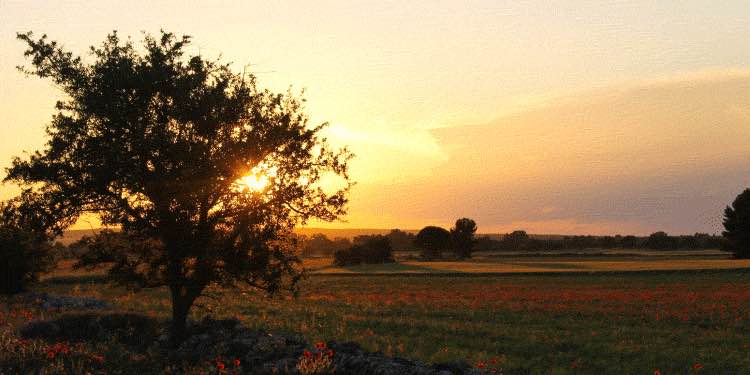
Just outside Manduria, the landscape opens onto the evocative Salento countryside, where vineyards and centuries-old olive groves accompany the journey towards the coast. Along the way, you pass by Bosco Cuturi, today a natural area of around 35–37 hectares protected within the Regional Nature Reserves of the Eastern Taranto Coast.
The landscape is dominated by holm oak and typical Mediterranean vegetation, with an undergrowth rich in aromatic and wild species that make the environment particularly atmospheric. It is an ecosystem of great natural value that still preserves a high level of biodiversity.
In addition to its natural features, the woodland also preserves traces of very ancient human activity: rock-cut tombs dating back to the Messapian period have been found in the area, providing further evidence of the long history of the territory. Nearby stands a rocky elevation known as Monte dei Diavoli, around 117 metres high, offering a beautiful panoramic view over the Ionian Sea from its summit and accessible via trekking routes.
The Chidro River Mouth Nature Reserve, at San Pietro in Bevagna, a coastal hamlet of Manduria, is a natural oasis where a crystal-clear freshwater river, fed by karst springs, flows into the Ionian Sea. According to tradition, the Chidro was born from the tears shed by Saint Peter, who arrived here as a shipwreck survivor after regretting his denial of Jesus. On the seabed opposite the river mouth lie ancient Roman sarcophagi, valuable archaeological evidence of a shipwreck that occurred around two thousand years ago. To protect this delicate ecosystem, swimming in the river is prohibited, while sustainable activities such as walks, nature excursions and birdwatching are permitted.
A few kilometres away lies the Salina dei Monaci Nature Reserve, one of the most important wetland environments along the Ionian coast of Puglia. This habitat is home to numerous species of migratory birds and is one of the best places to observe beautiful pink flamingos, together with black-winged stilts, herons and other bird species. The reserve is ideal for birdwatching, nature photography and environmentally respectful visits, offering an authentic experience surrounded by largely untouched nature.
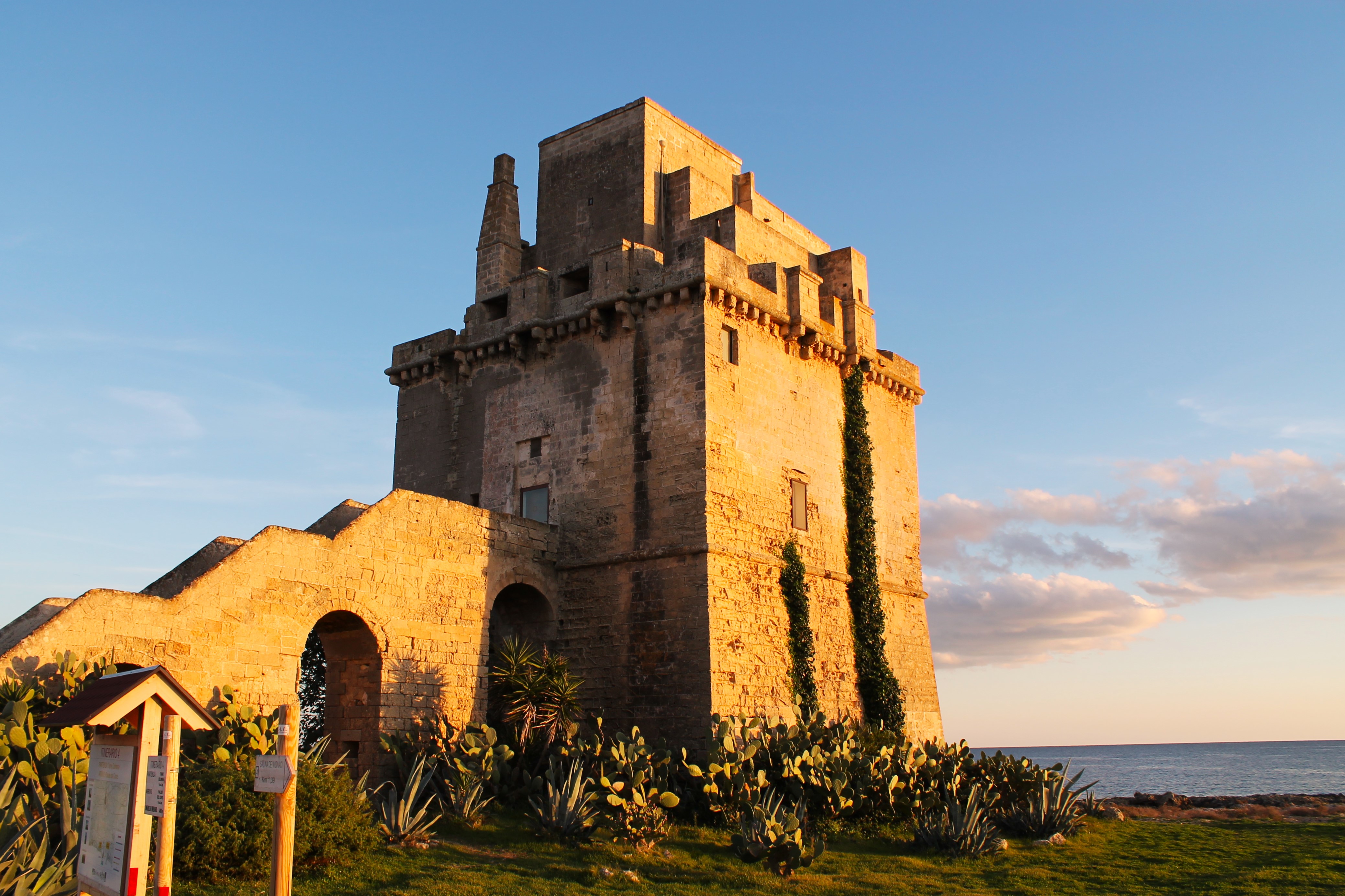
Along Manduria’s 15 kilometres of coastline, extraordinary landscapes follow one another: wide unspoilt beaches, sandy dunes, stretches of Mediterranean vegetation and striking rocky cliffs. The coastline is also marked by ancient watchtowers, such as Torre Colimena and Torre Borraco, the latter overlooking the river of the same name, making this stretch of coast even richer in history and character.
Reading this article and already dreaming of visiting Manduria?
Discover our trips and set off on your next adventure!
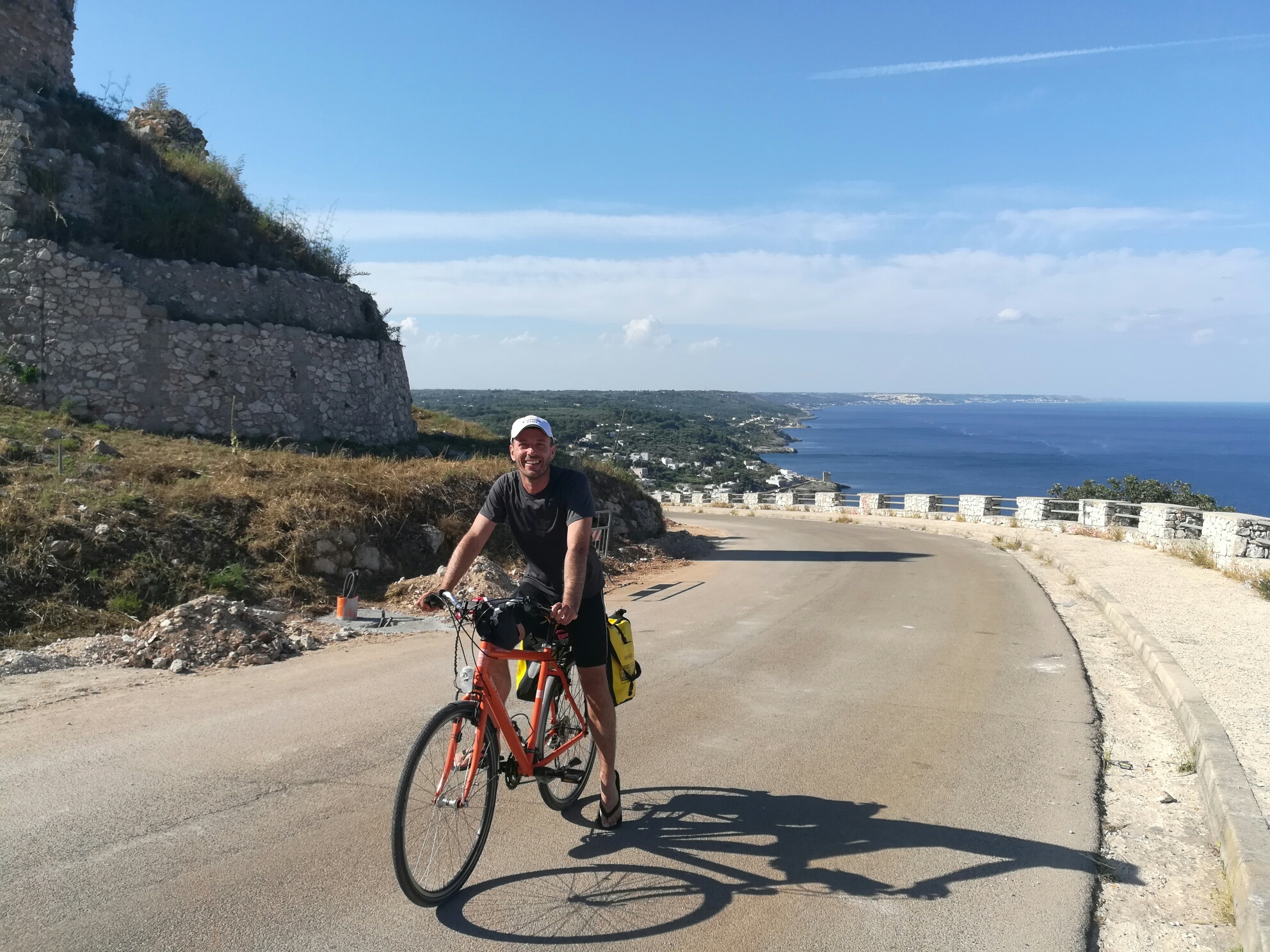
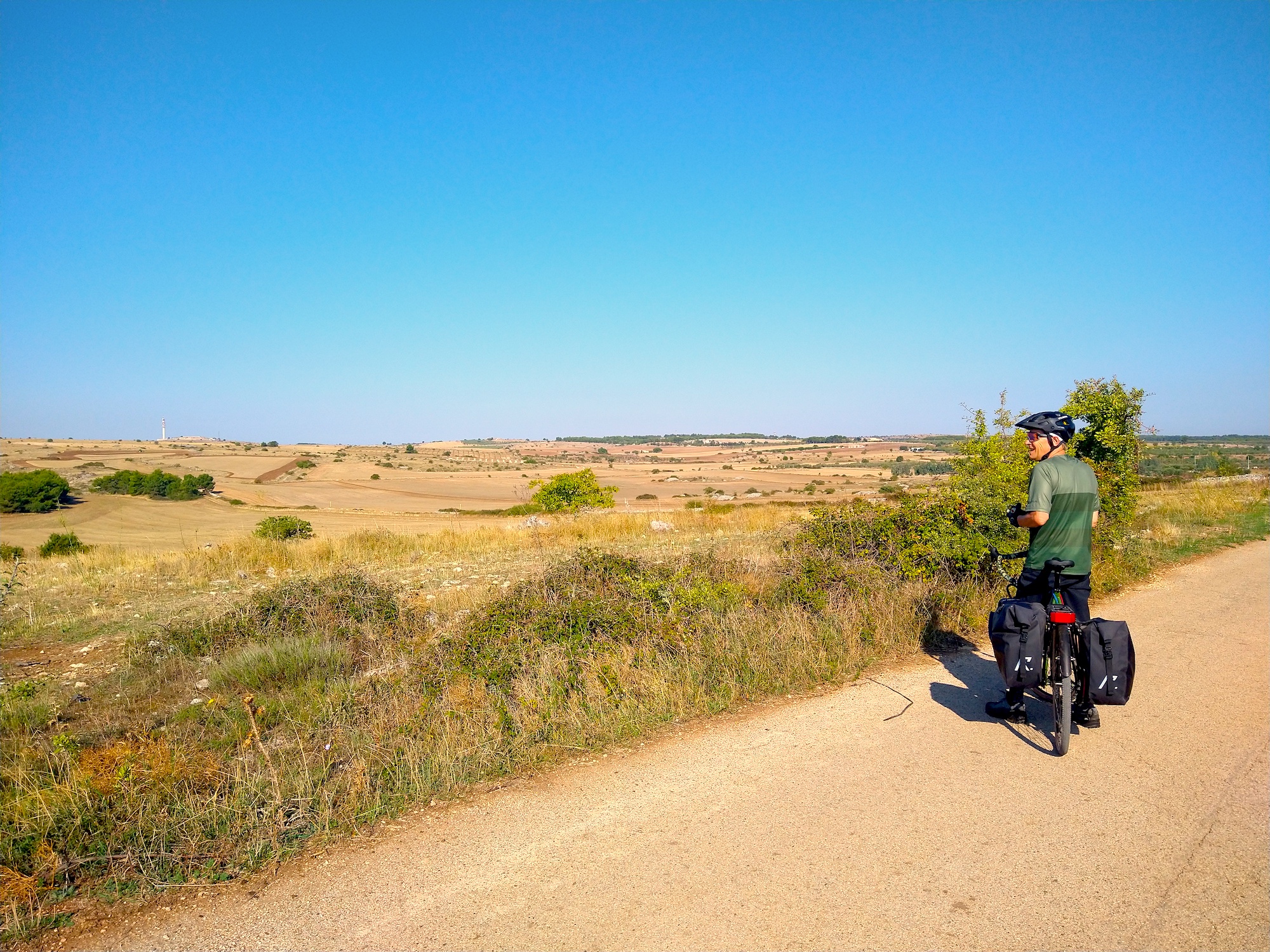
From the Trulli to Salento by Bike
From Alberobello to Lecce: a week by bike in Puglia
The Two Seas Route by Bike
From the Adriatic to the Ionian Sea by bike
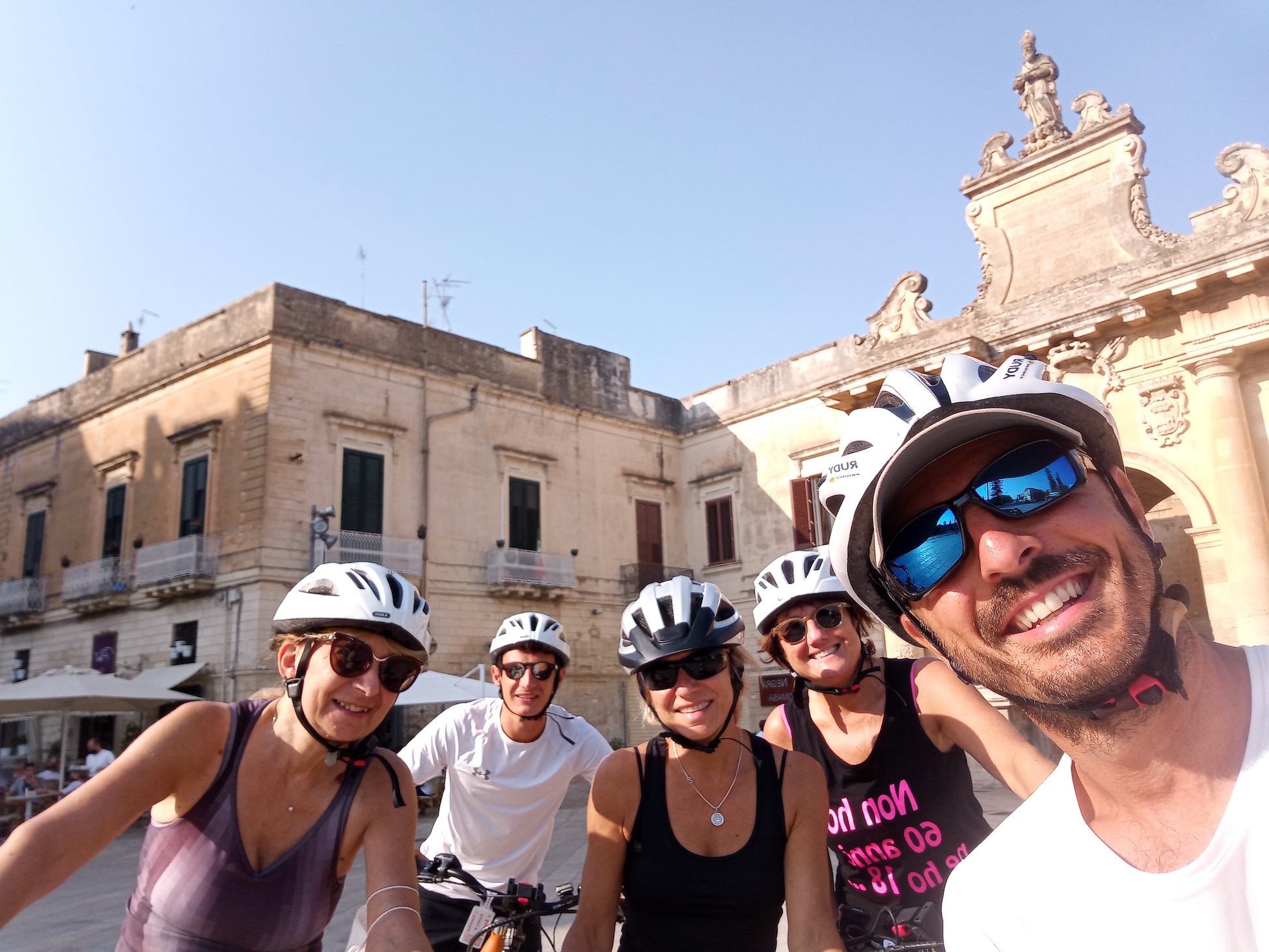
Puglia and Matera flavors cycling holiday
guided tour
Festivals and local celebrations
Manduria’s popular traditions are deeply connected to religious devotion and still represent some of the most important moments for the local community. The patron saint, Saint Gregory the Great, is celebrated on 12 March with solemn religious ceremonies and the historic Fiera Pessima, one of the oldest fairs in Puglia. The unusual name “Pessima”, meaning “terrible”, is traditionally attributed to the frequent bad weather conditions that characterise the days of the fair.
A second popular celebration dedicated to Saint Gregory takes place in September, with a procession carrying the statue of the saint through the town streets, accompanied by illuminated decorations, marching bands and fireworks, creating a lively atmosphere involving the whole community.
Among the oldest and most evocative religious traditions in the area is the pilgrimage from Manduria to the Sanctuary of San Pietro in Bevagna. What makes it particularly distinctive is the tradition of devotees carrying tree trunks and branches on their shoulders, a penitential rural ritual known as the “Processione degli Alberi” (“Procession of the Trees”). Originally performed to pray for rain and protection for crops during periods of drought, the pilgrimage remains a profound expression of faith and an important symbol of Manduria’s local identity.
Traditional dishes
Manduria’s cuisine has its roots in rural traditions and the Mediterranean diet, making the most of local products such as wheat, extra virgin olive oil, wine, pulses, vegetables, dairy products and fish. What was once considered “peasant cuisine” is now appreciated for its authenticity, simplicity and nutritional value.
Among the most representative dishes are “fai e foji”, a broad bean purée served with seasonal vegetables, “pizzarieddi” and “làjana”, traditional homemade fresh pasta, and the classic frisa, topped with water, olive oil, tomato and oregano. In summer, “giatedda” is also a local favourite: stale bread soaked in water and dressed with fresh tomatoes, olive oil, salt, garlic, celery and capers. Among the local dairy products, “ascanti” ricotta, a strong-flavoured ricotta, and cacioricotta are particularly distinctive.
Desserts also reflect local traditions: at Christmas, locals prepare pettuli and purcidduzzi, while Easter is marked by scarceddi, traditional sweet pastries decorated with hard-boiled eggs.
Manduria is also home to two Slow Food Presidia: Pomodorino di Manduria, an ancient variety grown without irrigation and known for its intense flavour, and Colombino from Manduria, a traditional pastry made with puff pastry and almonds. Both represent the gastronomic excellence and identity of the local area.
Eating and Drinking in Manduria
Here are some local recommendations:
Ristorante-Pizzeria I Mercanti at Vicolo I Imperiali Marchese 1. A traditional trattoria in the historic centre, offering a varied menu ranging from fish dishes to pizza. Open for lunch as well, reservations are recommended due to its popularity with both locals and visitors.
Color Vinaccia at Via Lacaita, 16. In the heart of the historic centre, this atmospheric venue offers traditional dishes paired with excellent wines.
Trattoria Messapica at Via Luigi Cadorna, 5/9. Just a short walk from the central Piazza Vittorio Emanuele, this traditional trattoria is also open for lunch and serves local dishes in a quiet and welcoming setting.