
Visiting Otranto means discovering one of the most fascinating towns in Salento, a place where history, culture and the sea meet at the easternmost tip of Italy.
Overlooking the Strait of Otranto, the town is known as the place where the first sunrise of the country appears and has represented a natural gateway between East and West for centuries.
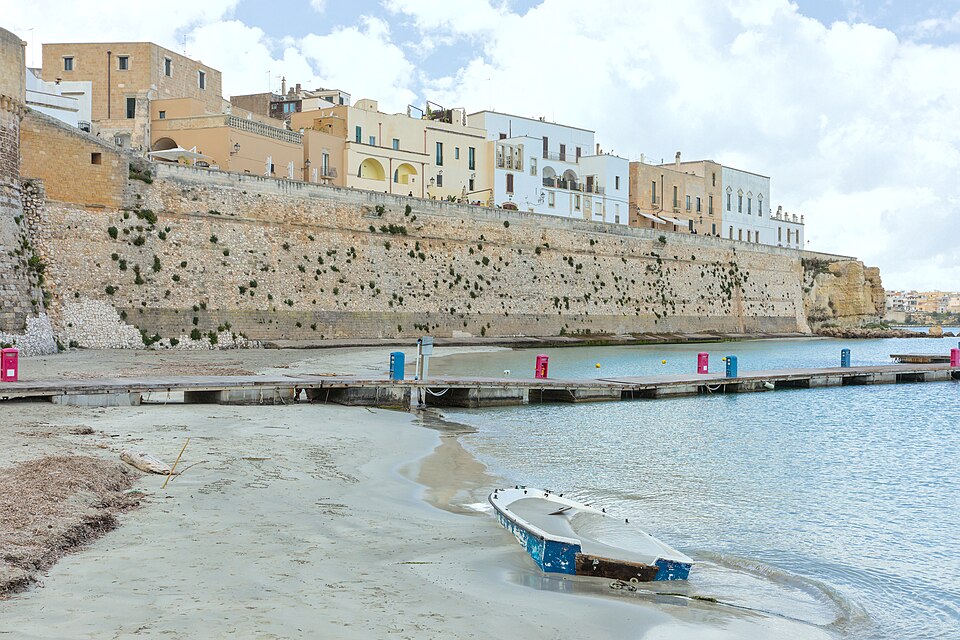
Thanks to its strategic position in the heart of the Mediterranean, Otranto was an important Byzantine port and a fortress contested by different civilizations. The evidence of this past can still be seen today in the historic centre, among narrow streets, walls, monuments and landmarks that tell more than two thousand years of history.
Precisely because of its role as a bridge between different cultures, in 2010 Otranto received UNESCO recognition as a "Messenger of Peace Site", a title celebrating its vocation for dialogue, encounter and the promotion of a culture of peace. Long before becoming one of Salento's most popular destinations, ancient Hydruntum — from which the adjective "hydruntine" derives — was an important Mediterranean centre.
Today, visiting Otranto means immersing yourself in a thousand-year history shaped by peoples, trade, conquests and traditions that have left behind a unique cultural heritage to discover.
What to see in Otranto
Visiting Otranto means immersing yourself in a town that reveals itself slowly, as you walk through the narrow streets of the old town, along its ancient fortifications and the viewpoints overlooking the Adriatic Sea. Considered one of the most fascinating destinations in Salento, Otranto preserves a unique historical, cultural and natural heritage.
The historic centre, enclosed by imposing defensive walls, preserves some of the most important monuments in Puglia. Among them stands Otranto Cathedral, famous for its extraordinary medieval mosaic and the Chapel of the Martyrs. Nearby are the Aragonese Castle, a symbol of the town, and the Church of San Pietro, one of the most significant examples of Byzantine architecture in Salento. Walking through the streets of the old town, you can also reach Porta Alfonsina, the ancient entrance to the fortified town, and the picturesque seafront overlooking the harbour.
Among the things to see in Otranto, the Punta Palascìa Lighthouse is also worth a visit. It is the easternmost point of Italy, where the country's first sunrise is symbolically celebrated every year. From here, the view stretches across the Strait of Otranto and, on the clearest days, as far as the mountains of Albania.
Otranto is not only about history and culture. The surrounding area is home to some of the most spectacular natural landscapes in Salento. Baia dei Turchi, with its beach surrounded by pine trees, the Alimini Lakes surrounded by Mediterranean vegetation, and the fascinating Bauxite Quarry, characterised by the intense colours of red earth and emerald-green water, are unmissable stops for anyone who loves nature and outdoor activities.
Among monuments, crystal-clear sea, coastal trails and places rich in history, Otranto offers a complete experience that allows you to discover the most authentic soul of Salento. This is a region that Slow Active Tours loves to explore through walking and cycling itineraries, ideal for experiencing every corner of the town and its surroundings at the right pace.
Cathedral of Santa Maria Annunziata
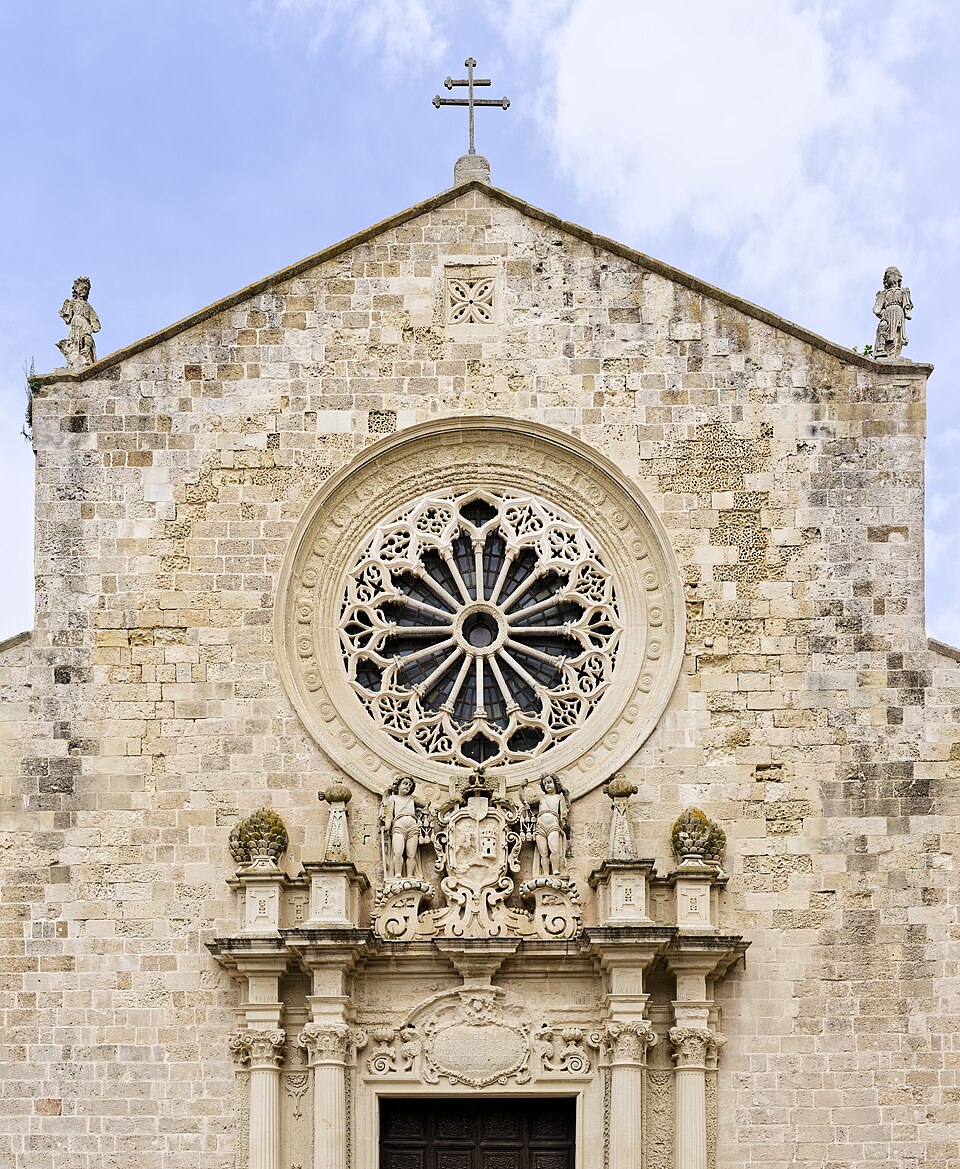
In the heart of Otranto's historic centre stands the magnificent Cathedral of Santa Maria Annunziata, a medieval masterpiece that tells centuries of history and encounters between different cultures. Built during the Norman period between 1080 and 1088 on the remains of older settlements, it combines Romanesque, Byzantine and Early Christian elements, bearing witness to Otranto's role as a bridge between East and West.
The cathedral's true treasure is its famous floor mosaic, created between 1163 and 1165 by the monk Pantaleone. This enormous stone narrative unfolds around the Tree of Life and features biblical scenes, mythological figures, fantastic animals and symbols of the medieval world.
Descending into the crypt, you discover another extraordinary corner of the cathedral: the fresco of the Madonna Odigitria, a precious Byzantine icon that survived the destruction of sacred images during the Turkish invasion, when the cathedral was converted into a mosque.
Do not miss the Chapel of the Martyrs of Otranto, where the relics of the 800 people from Otranto killed during the Ottoman siege of 1480 are preserved. A visit to the Cathedral is therefore a journey through the history, art and traditions of one of Salento's most fascinating towns.
Church of San Pietro
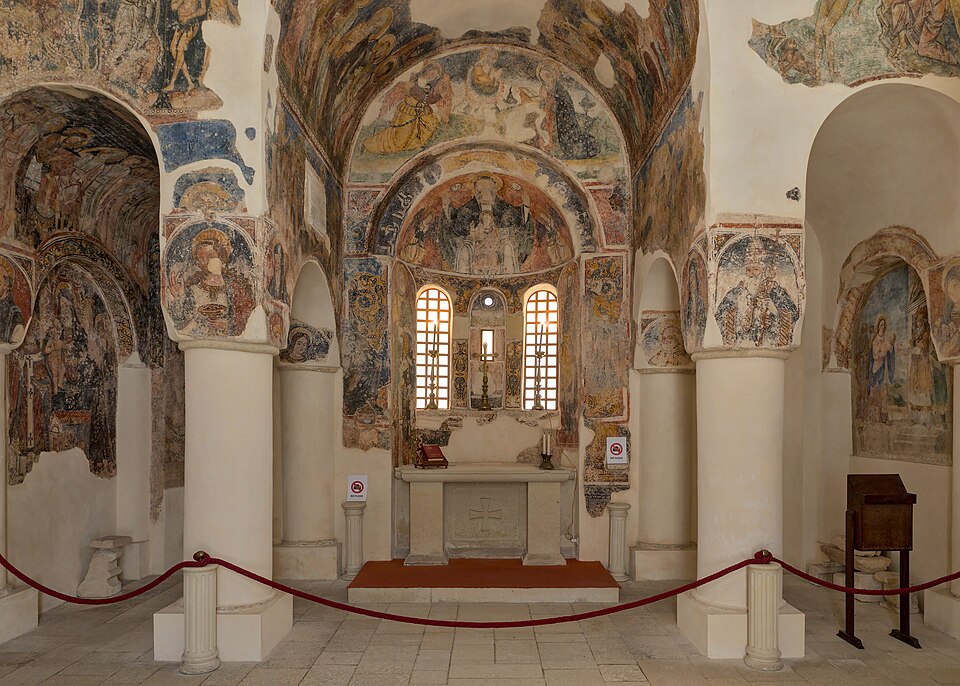
In the historic centre of Otranto stands the Byzantine Church of San Pietro, one of the most important examples of Byzantine architecture in Puglia. Built between the 9th and 10th centuries, it is distinguished by its characteristic Greek-cross plan and its precious cycle of frescoes decorating the interior.
Its small size has led scholars to believe that it was originally a private chapel belonging to a member of the Byzantine aristocracy.
Church of Madonna dell'Altomare
Located in a panoramic position overlooking the sea, the Church of Madonna dell’Altomare is one of Otranto's most characteristic landmarks. Always closely linked to the town's maritime tradition, it contains numerous decorative elements inspired by the sea, including nautical symbols and references to the lives of local fishermen.
Rebuilt in the 18th century on the site of an older building, the church is an important place of devotion for the people of Otranto and still maintains a strong connection with the sea, celebrated every year through traditional festivities dedicated to Madonna dell’Altomare.
Church of Santa Maria dei Martiri
On Colle della Minerva, in a panoramic position overlooking Otranto, stands the Church of Santa Maria dei Martiri, a place deeply connected to the town's memory. Built in the 17th century on the site of the tragic events of 14 August 1480, it commemorates the sacrifice of the 800 people from Otranto who lost their lives during the Ottoman siege for refusing to renounce their faith.
With its Renaissance and Baroque architecture and the works preserved inside, the church is one of the most significant places to discover the history and identity of Otranto, becoming a symbol of remembrance and devotion for the entire community.
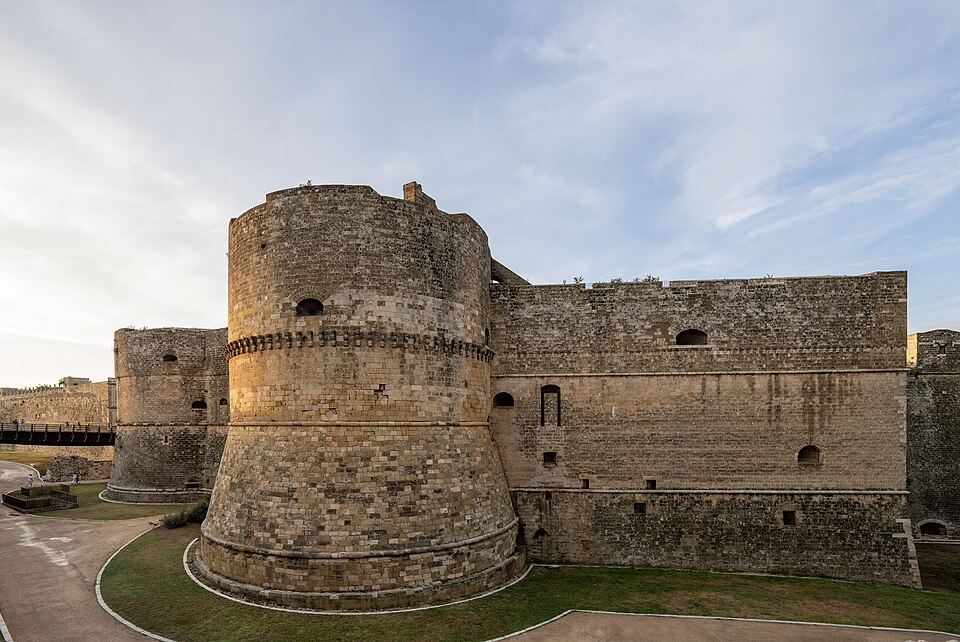
Aragonese Castle
Walking through the historic centre of Otranto, it is impossible to miss the imposing Aragonese Castle, a symbol of the town. Built on the ruins of an earlier fortress at the end of the 15th century, after the Ottoman siege of 1480, it was designed to defend the town and its harbour, becoming one of the most important examples of Renaissance military architecture in Salento.
Today, visitors can explore its rooms, bastions and ramparts, which offer magnificent views over the sea and historic centre. The castle also hosts exhibitions and cultural events and inspired two famous literary works: The Castle of Otranto by Horace Walpole, considered the first Gothic novel in history, and The Baron of Otranto by Voltaire.
Torre Alfonsina and the City Walls
Torre Alfonsina, located near Porta Terra, is part of Otranto's defensive system rebuilt after the Turkish siege of 1480 at the behest of Alfonso of Aragon. At its base are inscriptions bearing the name of the tower and the motto “SIT VIRGO MATER FORTITUDO MEA” (“May the Virgin Mother be my fortress”). The walls, expanded and renovated several times over the centuries, bear witness to Otranto's strategic role as the gateway to the East and an important Mediterranean stronghold.
Now that you’ve read the article, are you eager to set off and explore Otranto?
Take a look at our tours and enjoy Puglia!
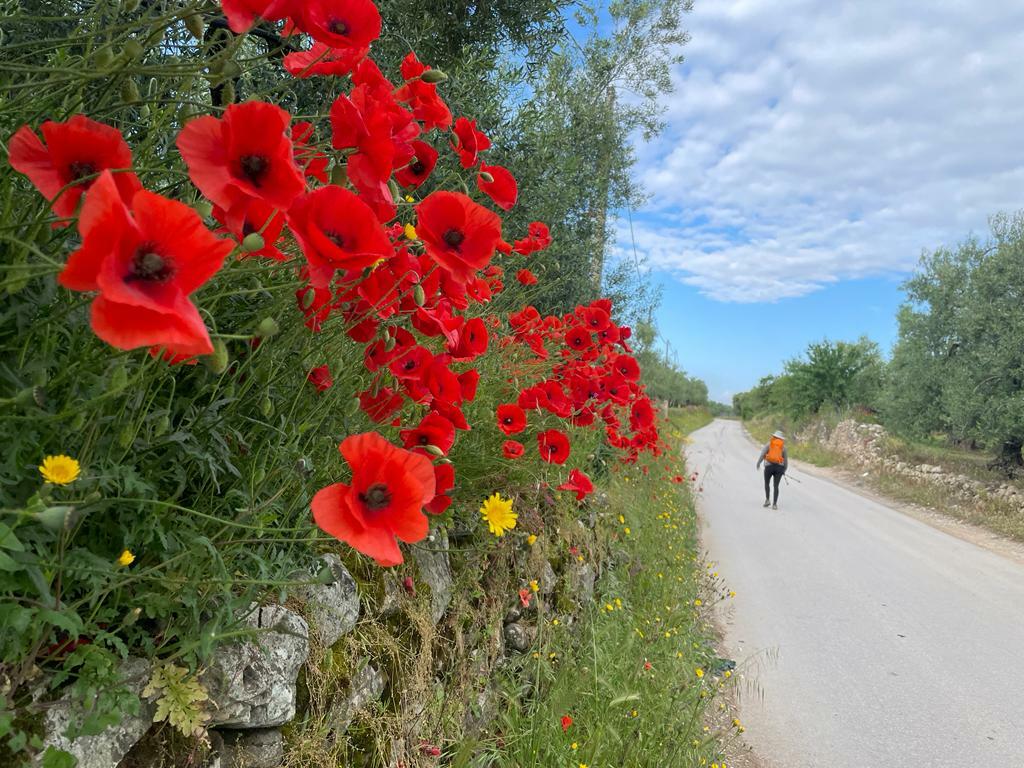
Wonder Puglia: walking the Southeast Coast
self guided walkiing tour
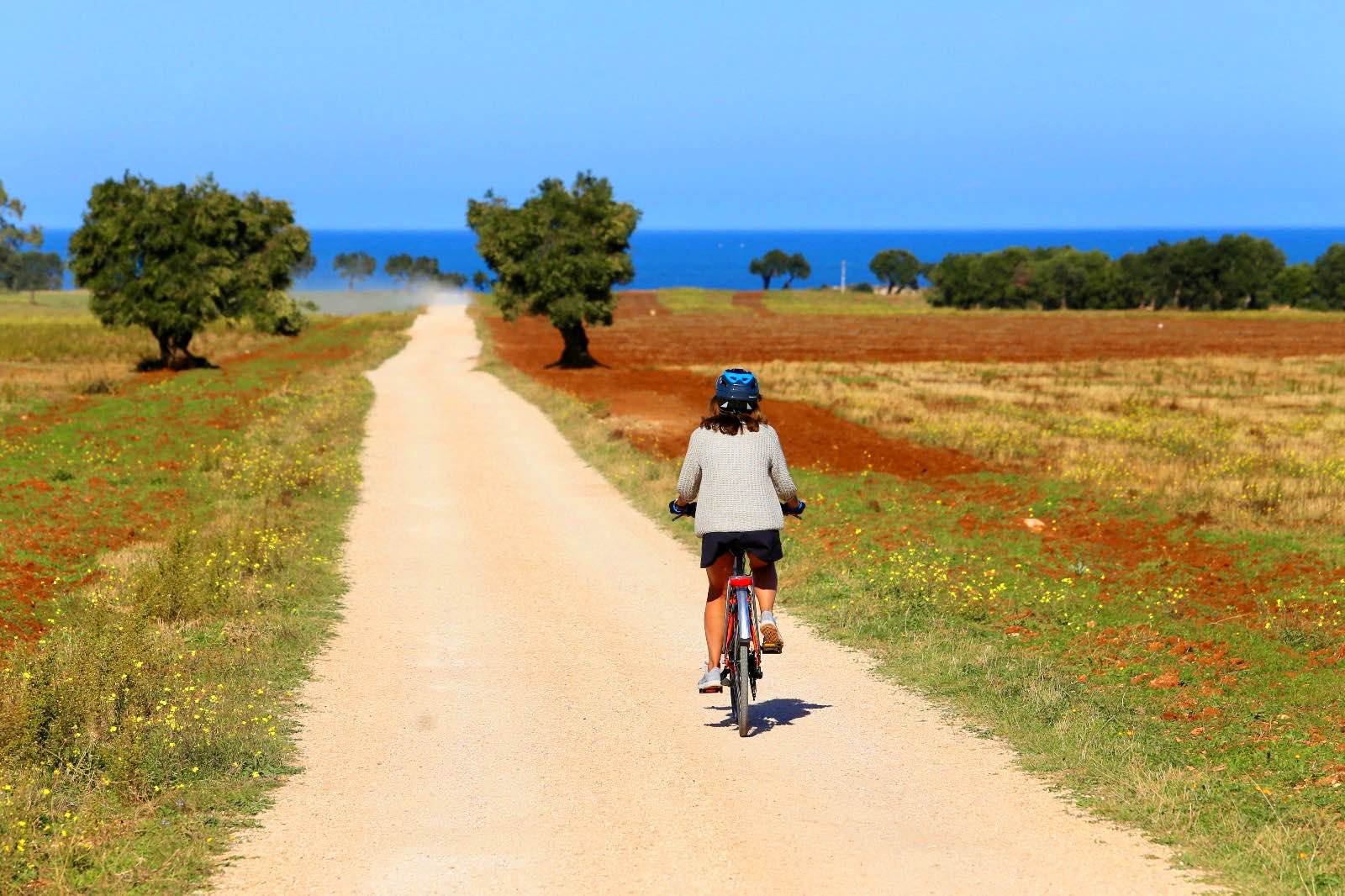
Salento bike tour
self guided cycling tour
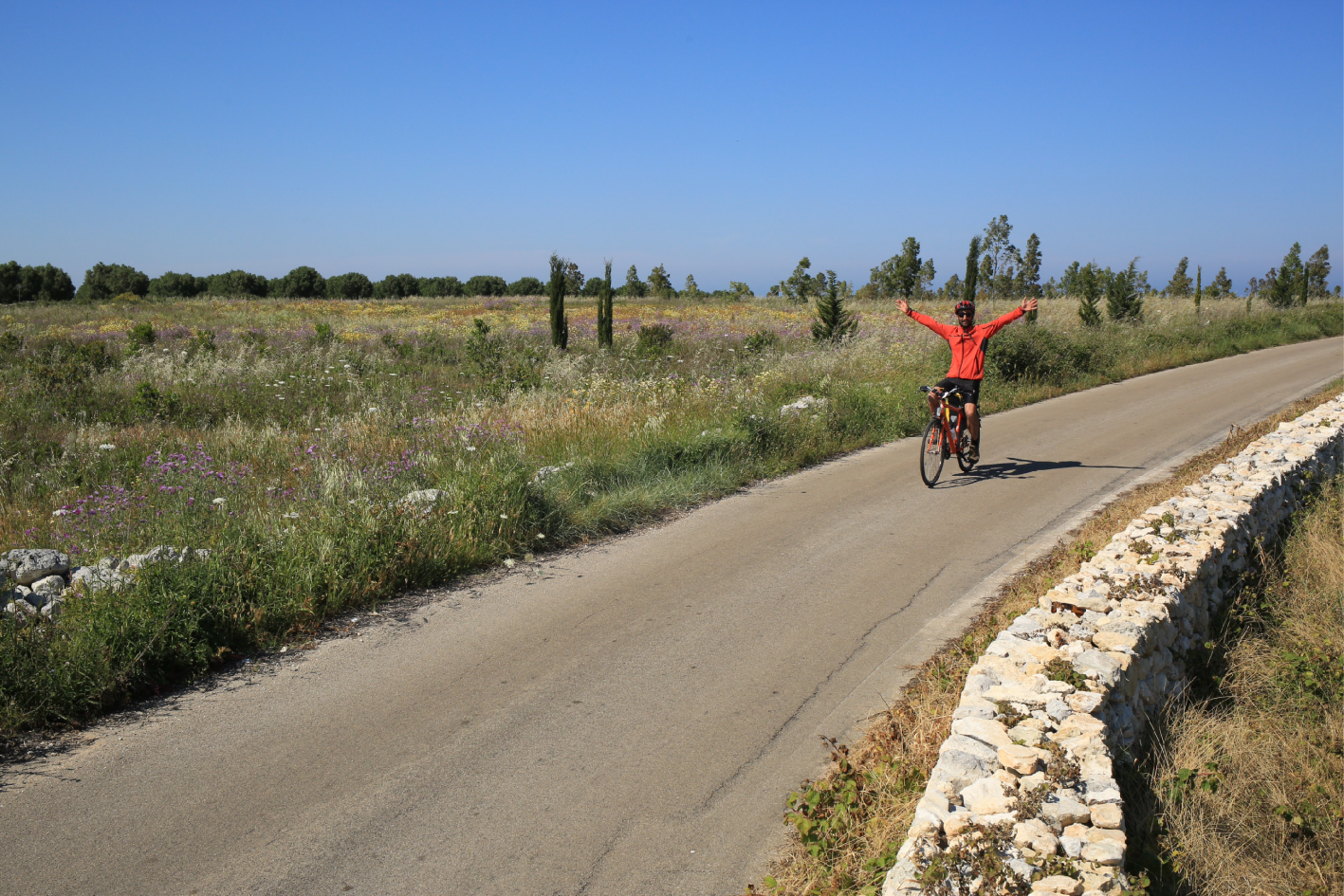
Discover Puglia by bike
From Alberobello to Lecce: a week by bike in Puglia
What to do in Otranto – Slow Active Tours' proposal
Museums and culture
Inside the historic Palazzo Lopez, just a few steps from the Cathedral, the Diocesan Museum houses a precious collection of art and religious heritage connected to the town's thousand-year history. Paintings, sculptures, stone artefacts, ancient manuscripts, silverware and sacred vestments tell the story of the evolution of the Church of Otranto over the centuries. It is an ideal visit for discovering a more intimate and lesser-known side of Otranto.
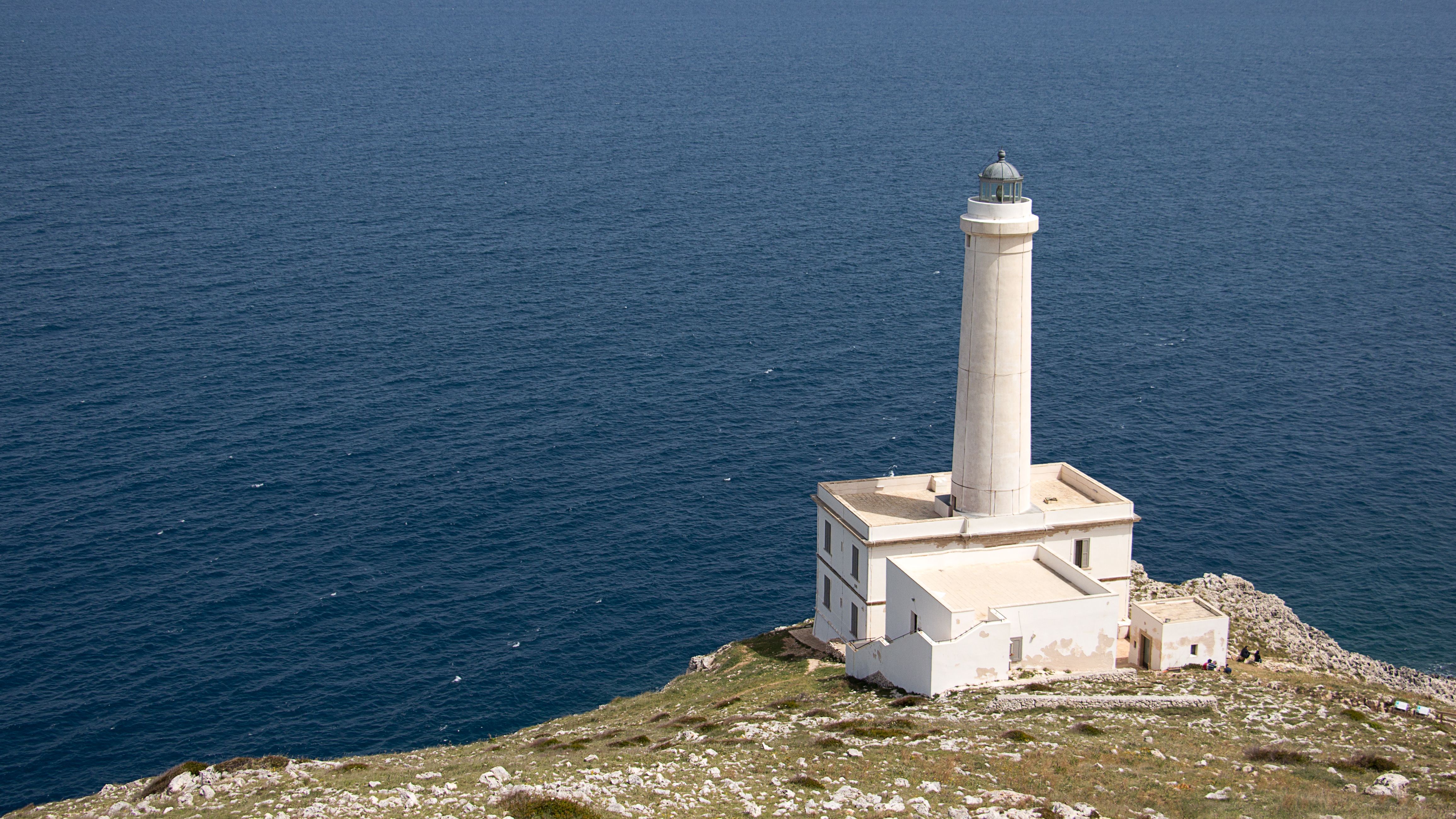
A few kilometres from Otranto stands the Punta Palascìa Lighthouse, a symbol of the town's connection with the sea and the easternmost point of Italy. Built in 1867, it overlooks the stretch of coastline where the Adriatic and Ionian Seas meet. Today it is one of the five Mediterranean lighthouses protected by the European Commission and is a place of great landscape and historical value. Thanks to its unique location, the lighthouse has also become a special destination on New Year's Eve: every year, many people gather at Punta Palascìa to welcome the New Year and watch the first sunrise in Italy on the first day of the year: a spectacular moment combining nature, sea and emotion.
A few kilometres from Otranto are the remains of the Monastery of San Nicola di Casole, one of the most important cultural centres of the Middle Ages in southern Italy. Founded by Basilian monks, in the 11th century it became an important centre for the study of Greek and Latin culture, thanks to its famous scriptorium and its rich library of manuscripts.
After its decline following the Turkish siege of 1480, only a few traces of the monastery remain today, but its history continues to bear witness to Otranto's role as a meeting place between East and West. Its fame is also linked to Umberto Eco, who refers to the monastery in his novel The Name of the Rose through the character of Adelmo of Otranto, a monk and illuminator.
Nature and surroundings
The area around Otranto is rich in natural beauty and archaeological remains, where the Salento landscape meets the traces of peoples and civilizations that have left their mark over time. The area forms part of the Serre Salentine, a system of low hills characterising the landscape of southern Puglia, shaped by ancient limestone rocks, olive groves, dry-stone walls and typical Mediterranean vegetation.
The Otranto coastline also offers some of the most evocative landscapes in Salento. Among the most popular destinations is Baia dei Turchi, a true gem of the Adriatic coast: a stretch of white sand surrounded by pine trees and located within the Alimini Lakes area. Its name recalls the historic landing of the Turks in 1480, an event connected to the history of Otranto. Nearby are the Alimini Lakes, one of the best-known seaside areas, characterised by long sandy beaches, dunes and two coastal lakes that make this environment particularly rich in natural biodiversity.
Heading south, you reach Baia delle Orte, a wilder and more peaceful place, where rocky coastline, clear waters and Mediterranean vegetation create an ideal landscape for those seeking a more authentic connection with nature. Further south lies Porto Badisco, a small inlet of great scenic beauty, surrounded by cliffs and also associated with the nearby Grotta dei Cervi, an important testimony to Salento's prehistoric past.
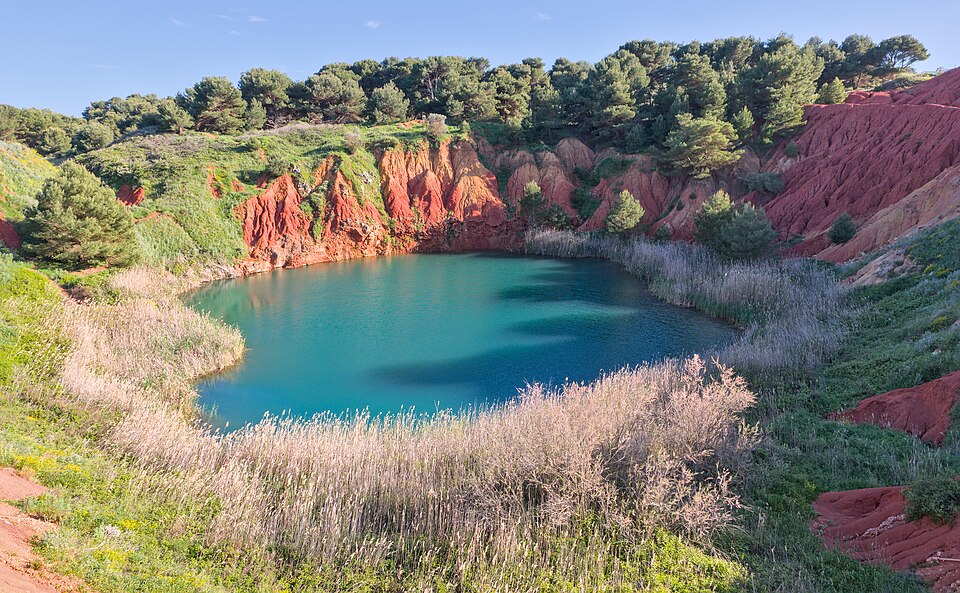
A stretch of coastline where every beach tells a different story: from the Caribbean-like waters of the sandy bays to the wild cliffs overlooking the Adriatic, the Otranto area offers an experience combining relaxation, nature and culture. Just a short distance from Baia delle Orte lies the Bauxite Quarry. Once an extraction site, it has now been transformed by nature into a unique landscape where vegetation, intense red earth and the emerald-green waters of the small lake create a spectacular contrast.
Created by mining activities that began in the 1940s to extract bauxite, the quarry was abandoned in the 1970s and gradually filled with water, giving rise to this small lake with its distinctive colour. Today it is a much-loved destination for those looking for panoramic viewpoints and extraordinary landscapes.
Local festivals and traditional celebrations
Feast of Saint Cataldo
Otranto is a town to experience all year round. Alongside its beaches and the charm of its historic centre, the events calendar offers religious celebrations, food festivals and events that reveal the most authentic soul of Salento. Taking part in one of these occasions means immersing yourself in local traditions, among music, flavours and ancient rituals.
Historic Centre Food Festival
Between the end of June and the beginning of summer, the heart of Otranto turns into a large open-air celebration. The Historic Centre Food Festival, organised for the feast of Saints Peter and Paul, brings the narrow streets and squares to life with food stalls, traditional music, handicrafts and performances. It is the perfect opportunity to taste Salento specialities and experience the authentic atmosphere of the old town.
Feast of the Holy Martyrs
From 13 to 15 August, Otranto celebrates its most important festival, dedicated to the 800 Martyrs, symbols of the town's history and identity. Solemn processions, religious celebrations and evening events involve the entire town, offering visitors an intense experience where faith, memory and tradition come together in a unique atmosphere.
Feast of Madonna dell'Altomare
On the first Sunday of September, the sea becomes the protagonist of the Feast of Madonna dell'Altomare, patron saint of fishermen. The most moving moment is the traditional procession at sea: the statue of the Madonna is placed on a fishing boat, followed by a procession of decorated boats sailing through the harbour and along the coast in a moving tribute to the patron saint of seafarers. During the procession, a laurel wreath is thrown into the sea in memory of those who lost their lives. A celebration that tells the story of Otranto's deep connection with the Adriatic Sea.
L'Alba dei Popoli
Between the end of December and New Year's Eve, Otranto hosts L'Alba dei Popoli, an event that goes far beyond a simple end-of-year concert. Thanks to its location, the town has always been considered a natural bridge between East and West, a meeting place for cultures, peoples and traditions of the Mediterranean.
Concerts, performances, exhibitions and events accompany residents and visitors until the most eagerly awaited moment: the sunrise concert on 1 January, when the first sun of Italy rises over the sea of Otranto. An event with strong symbolic value that celebrates dialogue, peace and encounters between peoples.
Traditional dishes
Otranto's cuisine combines the flavours of the sea with Salento's culinary traditions. Among its signature dishes is scapece, small blue fish that are fried and marinated with breadcrumbs, vinegar, garlic, mint and saffron; polpo alla pignata, slowly cooked in a terracotta pot with potatoes, tomatoes and onion; and quataru, the traditional fish soup of Otranto's fishermen. Also worth trying are ciceri e tria, sagne ncannulate, puccia Salentina and the typical pasticciotto Leccese.
Where to eat and drink in Otranto
Here are some local suggestions:
Al Tartufo Restaurant in Via Idro, 32. The restaurant was born from Giuliano and his father Aldo's passion for searching for fine truffles and their desire to bring their knowledge and creativity into the kitchen. Something different for truffle and mushroom lovers. Open kitchen.
40° Parallelo Lungomare degli Eroi, 17. Local street food. You order inside and they call you when your food is ready so you can sit at tables and high stools overlooking the sea. A rich menu of local specialities, from pucce to frise.
Ristorante La Pignata in Corso Garibaldi, 7. Among the narrow streets of Otranto, you can enjoy a fish-based dinner at this restaurant, founded in 1997 thanks to the vision of Salvatore and Rosina, who passed their experience on to their son Nicola.